CRUISING MAINSAILS
Dacron Cross-Cut
Woven polyester, cross-cut for value and longevity — the most durable, easiest-to-service, best-value way to put a dependable cruising main on your boat.

Why a Dacron cross-cut main?
Sails made from woven polyester are still a smart choice for cruisers. They can be repaired by any loft with a sewing machine, they mildew less because the cloth breathes rather than trapping water, they have a traditional look, and they cost less than laminate or membrane sails. Dacron comes in many grades — from more performance-oriented to more economical — so you can match the cloth to your boat and budget. (It’s available for genoas, too.)
Even our basic cruising Dacron is built to a higher standard than off-brand sails: properly sized corner and reef patches, premium hardware, and UV covers applied last — over the corner webbings and stitching, where sails usually start to fail.
Built to Last
Exceptional durability
Dacron shrugs off the chafe, UV, bending, and folding a cruising sail lives with. When longevity is the priority, woven polyester is the cloth of choice.
Simple to Service
Repairs almost anywhere
Any loft with a sewing machine can fix a Dacron sail — and because the cloth breathes instead of trapping water, it’s less prone to mildew than a laminate.
Great Value
Traditional cloth, fair price
Dacron costs less than laminate or membrane sails, carries a classic look, and comes in many grades so you can match cloth to budget.
How a Cross-Cut Dacron Sail Works
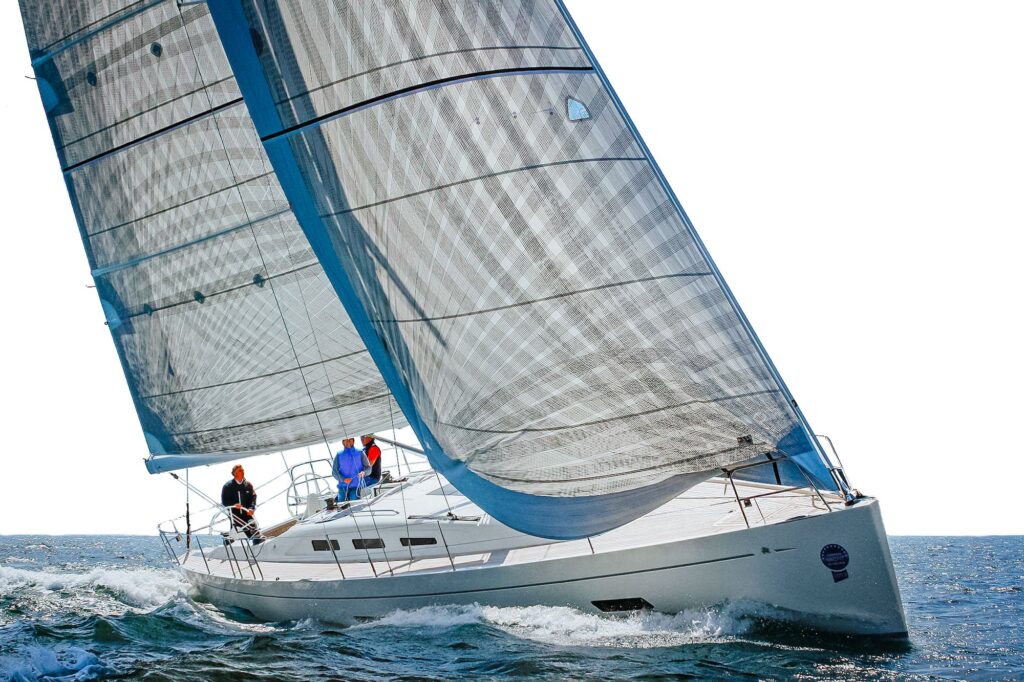
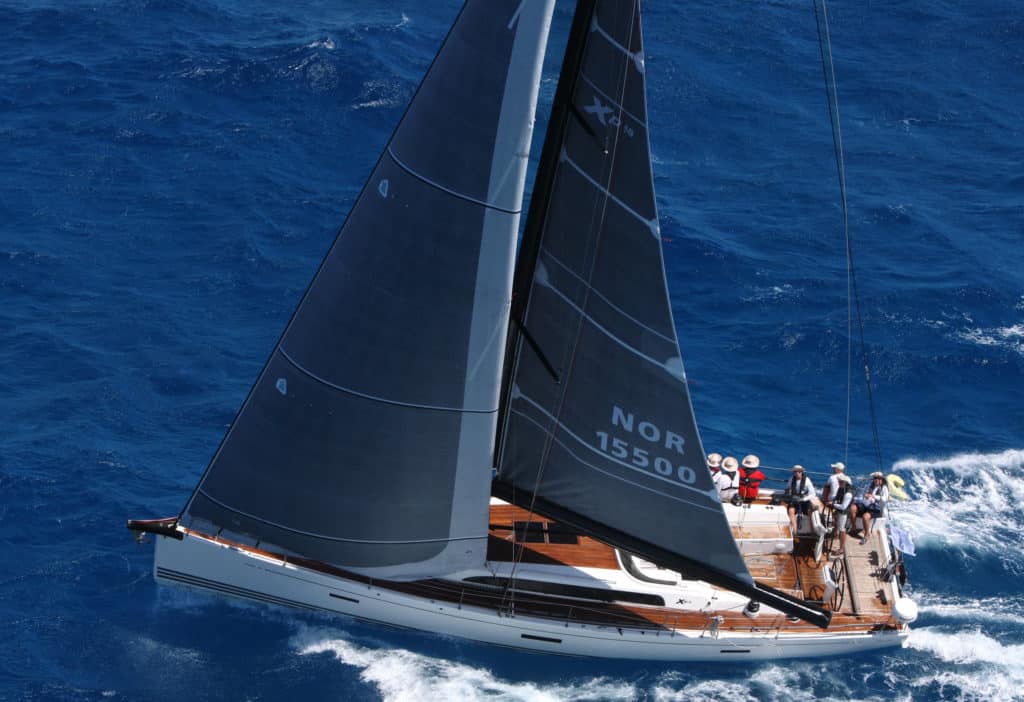
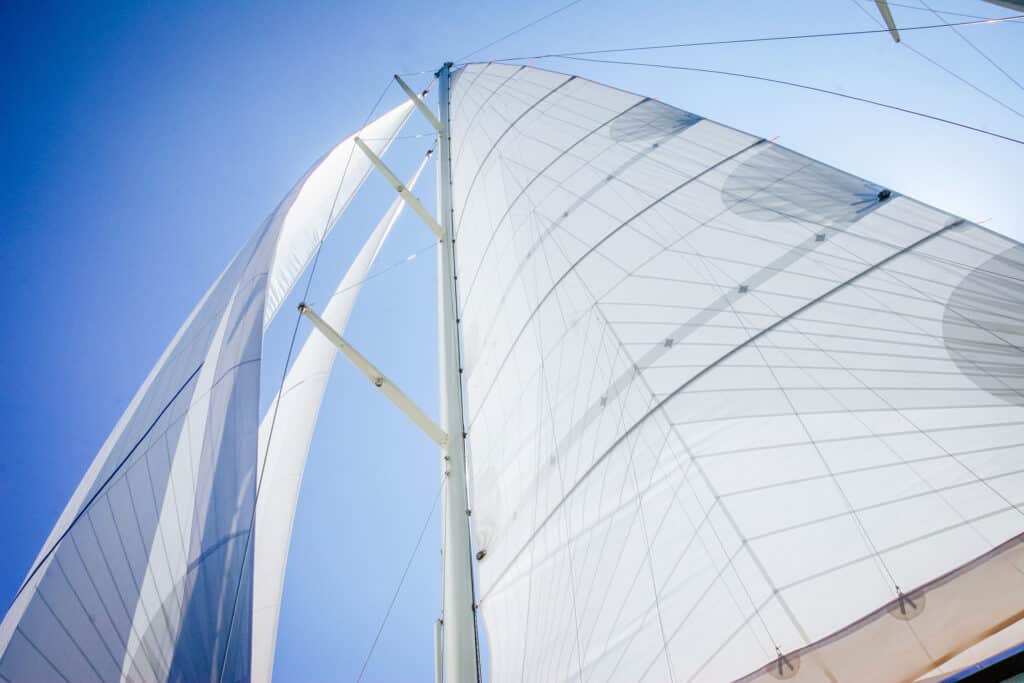
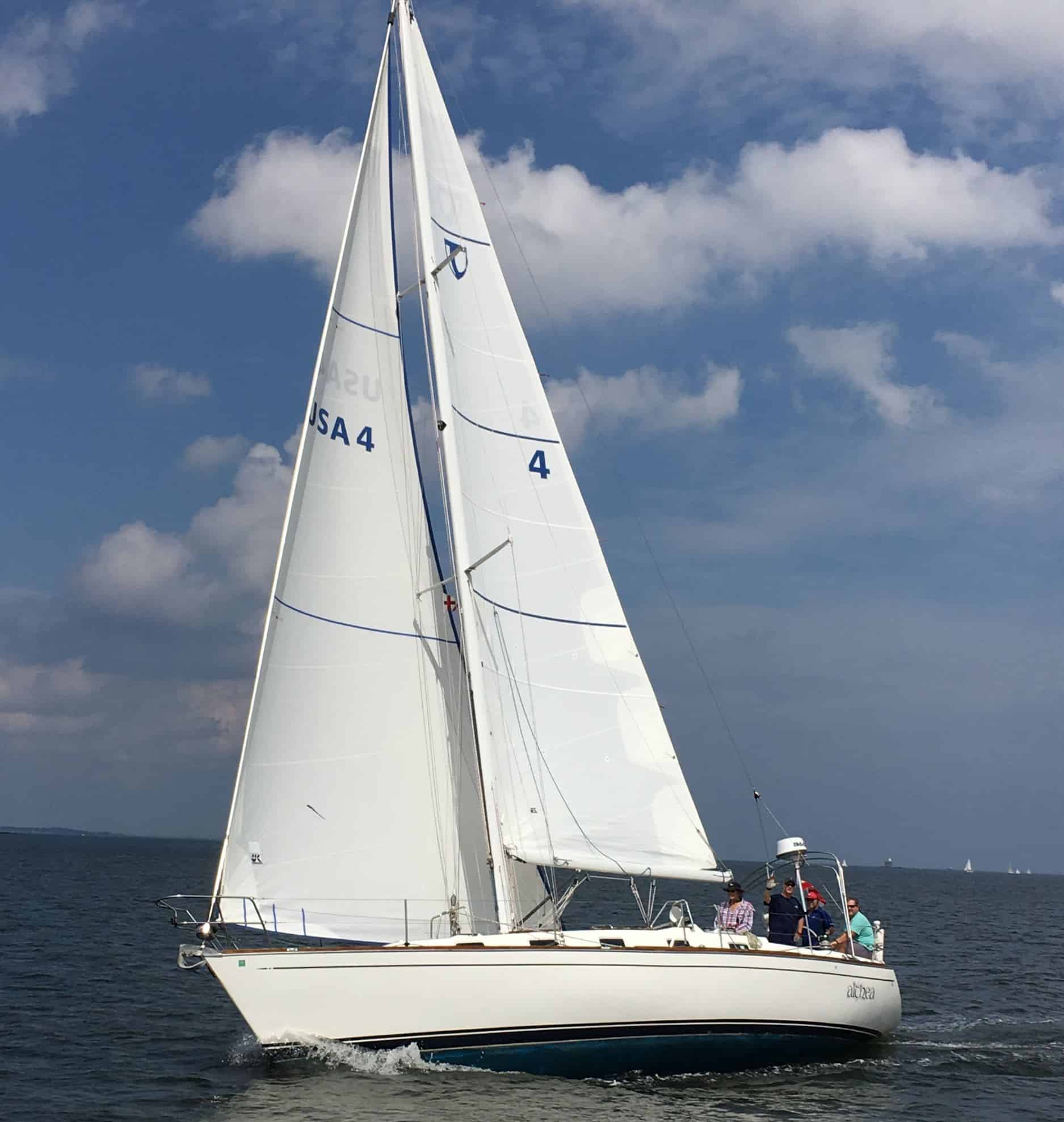
Cross-cut Dacron sails have all their panels running parallel to each other and perpendicular to the leech. The cloth is fill-oriented — its strongest yarns run across the panels — so the strength lines up with the highest loads in the sail, which run up and down the leech, while the warp yarns add lateral stability.
Cruisers choose Dacron for all-around strength and value. When longevity is the priority, it’s the cloth of choice: resistant to most of the wear a sail sees, with fair UV resistance, virtually unaffected by bending and folding, and resistant to chafe — handy with overlapping genoas. UV-protective luff and foot covers on a furling sail add even more life.
The trade-off for that longevity is shape life. A Dacron sail stays in one piece for many years, but it slowly loses its designed aerodynamic shape, because polyester yarn stretches more than high-tech fibers like aramid and carbon. Choosing stronger yarns and a more heavily finished cloth helps it hold its shape longer.
At a Glance
Description: Cross-cut panel layout.
Construction: Efficient, nearly wasteless use of woven polyester sailcloth. Panels are oriented so the strong fill yarns run parallel to the straight-line leech — the part of the sail that sees the highest loads.
Material: Woven polyester (Dacron), available in many thread weights and finishing styles. The stronger the yarns and the more the cloth is finished, the better the sail holds its designed shape.
Shape stability: ★–★★
Durability: ★★★★
Price: $$
Want More Shape-Holding?
Dacron is the woven-polyester option. For cruisers who want the durability of a woven sail with better shape retention, the same mainsail is available in higher-tech cloths:
Available Details
Available with:
- Reefs
- Loose Foot
- Cunningham
- Telltales
- Draft Stripes
- Sail Numbers
- Leechline Options
Battens:
- Powerhead
- Full Battens
- Furling Mains
Other Options:
- Lazy Cradle
- Lazy Jacks
- Dutchman
- Sail Cover
FAQs
Is a Dacron main strong enough for serious cruising?
Yes. Dacron is one of the most durable sailcloths going — resistant to chafe, UV, and the constant bending and folding a cruising sail sees, so it stays sound for many seasons. The trade-off is shape, not strength: polyester stretches more than high-tech fibers, so the sail gradually loses its designed aerodynamic shape even while the cloth itself stays intact.
What’s the difference between cross-cut and radial?
Cross-cut runs the panels horizontally, perpendicular to the leech, using fill-oriented cloth so the strongest yarns line up with the highest loads — which run up and down the leech. It’s the most efficient, nearly wasteless layout, which keeps cost down. Radial sails align the yarns with the loads from all three corners for better shape-holding, at a higher price. For value and durability, cross-cut Dacron is hard to beat.
How long will a Dacron sail last?
Structurally, many seasons with good care. Its useful shape life is shorter than its structural life — it’ll hold together long after it has stretched past its best shape. Rinsing salt off, keeping it out of the sun when not in use (UV covers on a furling sail help a lot), and choosing a stronger, more heavily finished cloth all extend the window in which it holds its designed shape.
Will a Dacron sail mildew?
Less than a laminate. Because the cloth is woven rather than film-based, it breathes and doesn’t trap water the way a laminate can, so it’s less prone to mildew — useful in damp or humid climates. Still, let it dry before long storage.
Can I get a Dacron main for in-mast or in-boom furling?
Yes. We build Dacron mains for powerhead, full-batten, and furling rigs, with options like a loose foot, reefs, a Cunningham, draft stripes, lazy jacks, a Dutchman, and a sail cover. Cross-cut Dacron flakes and furls easily, which is part of its appeal.