
CRUISING MAINSAILS
Radial Taffeta
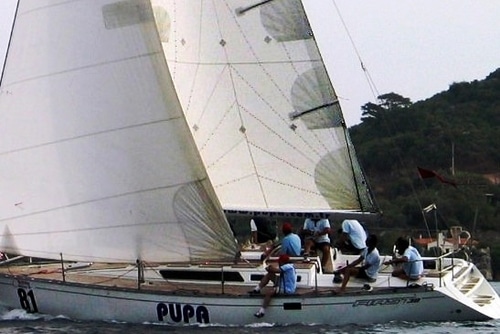
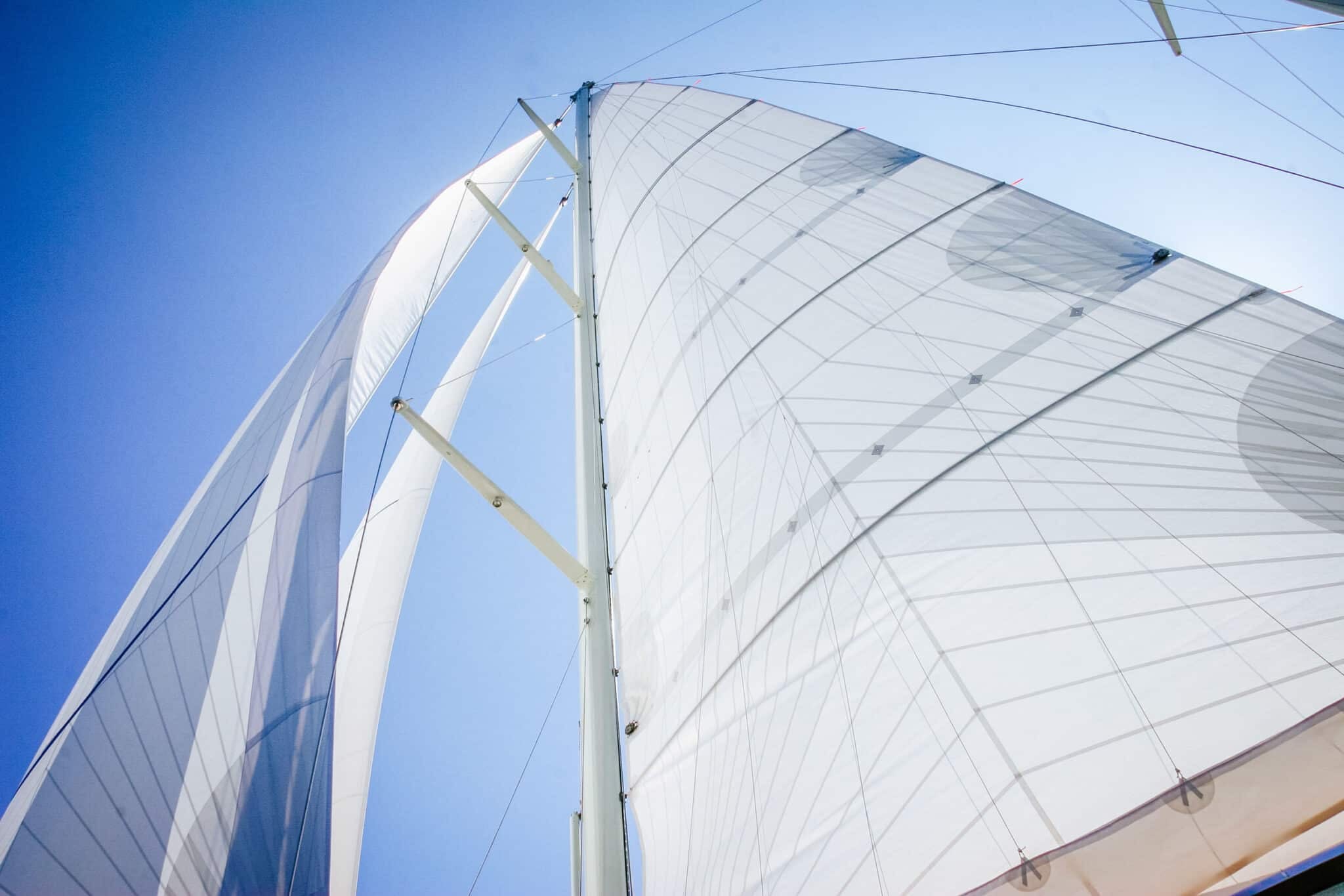
Tri-radial panels following the load paths, taffeta both sides — a clear step up in shape-holding from cross-cut cloth.
Photo © UK Sailmakers
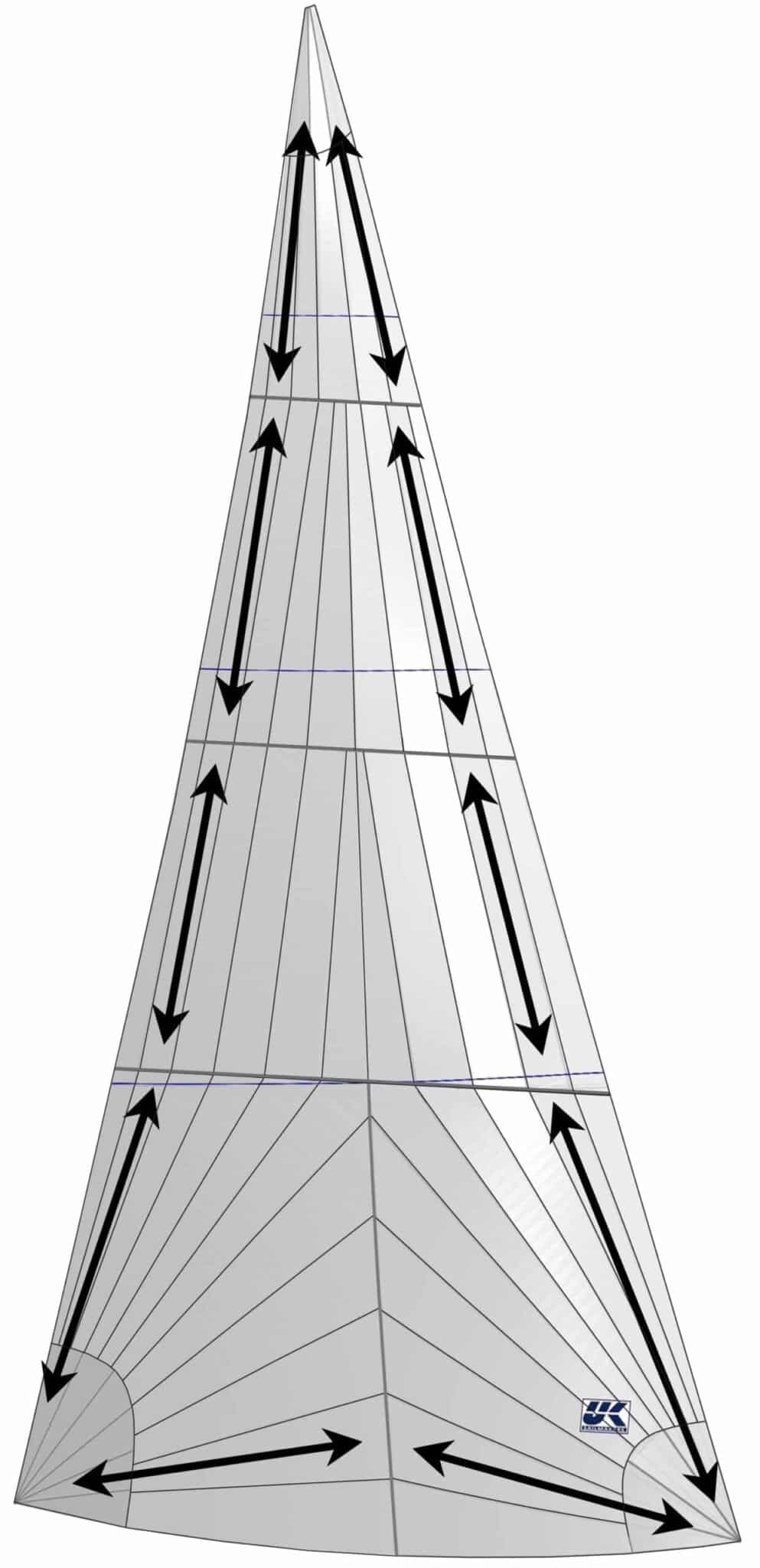
Tri-radial layout
Long, narrow panels radiate from the three corners along the load paths connecting them — cloth warp aligned with the loads.
Better than cross-cut
The narrower the panels, the better the shape-holding — a clear step up from basic cross-cut construction.
Proven and repairable
Conventional cloth and seams any loft in the world can service.
HOW IT'S BUILT
Panels that follow the loads.
Radial construction cuts the sail into long, narrow panels that radiate from the corners, following the load paths that connect tack, head, and clew. Aligning the cloth’s strongest direction with the loads reduces stretch where it matters most.
It is the classic performance construction for woven and taffeta-finished cloth — more labor than cross-cut, rewarded with visibly better flying shape as the breeze builds.
AT A GLANCE
Appearance Grey, white
Shape stability ★★★☆☆
Durability ★★★☆☆
Price band $$$–$$$$
ISL upgrade Mainsail — n/a
HOW IT LOOKS, HOW IT WORKS
Radial Taffeta in detail.
Photos & diagrams © UK Sailmakers
QUESTIONS SAILORS ASK
FAQs
A radial sail is built from long, narrow panels (gores) that radiate from the three corners, so the cloth’s strongest warp yarns line up with the loads that arc between the corners. Cross-cut sails run their panels horizontally with the strong yarns parallel to the leech; aligning the yarns with the actual loads gives a radial sail flatter, more stable shape-holding in the same cloth.
Radial was the original performance construction, before taped (string) sails and membranes. A string or membrane sail holds shape better still, but a radial sail is a proven, rugged, lower-tech choice for cruisers who prefer traditional woven or laminated cloth — often at a friendlier price, with simple repairs you can make almost anywhere.
Woven Dacron is the most economical and very tough. Polyester laminate holds shape a little better than woven. Spectra laminate and woven HydraNet sit at the top: the best shape-holding in the radial family, at the top of the price range. Your loft matches the cloth to your boat size, your mileage, and your budget — and on a radial sail we can even mix cloths, using stronger material in the leech and tack and lighter cloth in the luff.
HydraNet is a woven cloth with a high share of Ultra-PE (the Spectra/Dyneema family) in the warp, woven tightly with high-tenacity polyester. It gives you laminate-like shape retention in a woven sail — lighter than Dacron of equal strength, with a soft hand and a classic white look. Being woven, it’s also breathable (less prone to mildew than a laminate) and can be repaired anywhere with a sewing machine, which is why long-distance cruisers love it.
Yes. Woven Dacron and HydraNet in particular are extremely rugged, and laminate versions can be taffeta-faced for abrasion and UV protection. We build radial mains for powerhead, full-batten, and furling rigs — battenless for in-mast furling, or with vertical battens to carry more roach.
Other cruising mainsails builds
Same sail, different construction — compare them all.