

CRUISING GENOAS
Titanium Double Taffeta
A light, smooth, wrinkle-free membrane genoa — continuous carbon load-path yarns laid dry between shaped films, with a woven taffeta on both faces for cruising durability.
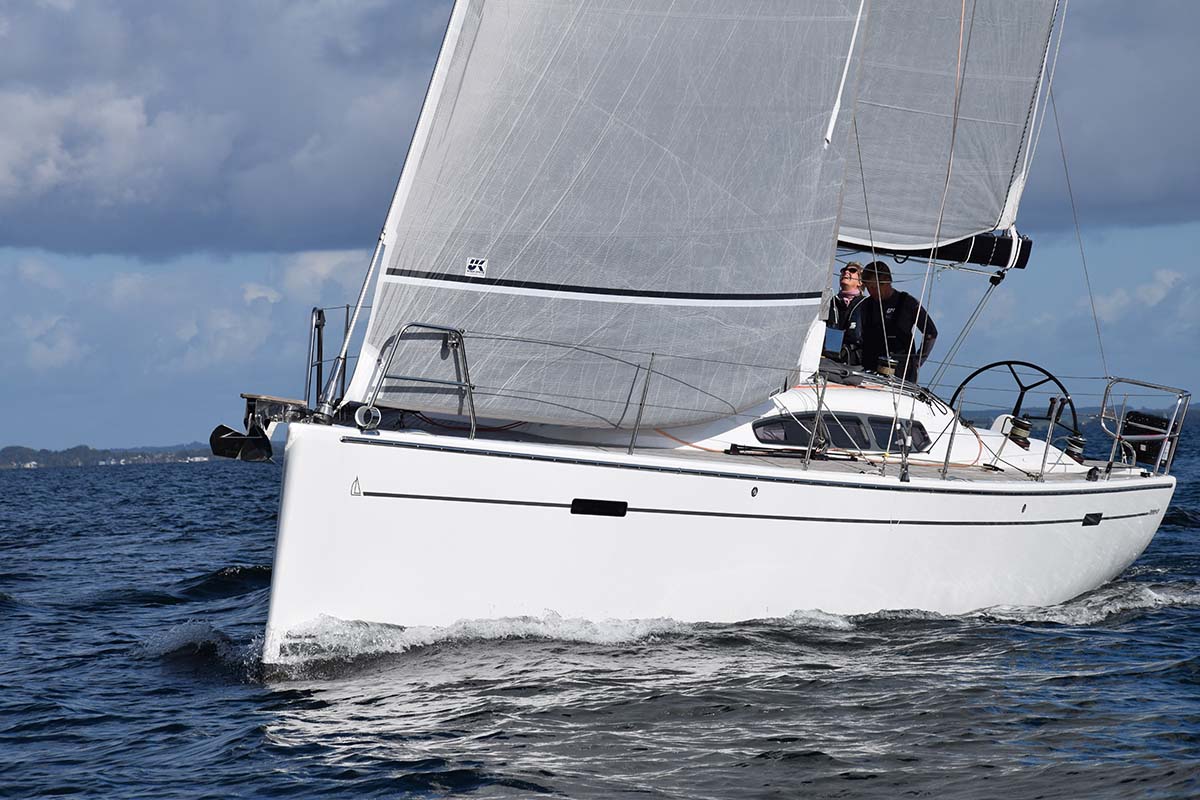
Why Titanium Double Taffeta?
Titanium Double Taffeta cruising sails are an attractive alternative to heavy, multi-ply Dacron or radially-paneled sails. They’re built with continuous load-path yarns fused between two layers of film, and the outside of each film is covered with a finely woven polyester taffeta — a five-layer sandwich that’s light, smooth, and tough enough for cruising.
Holds Its Shape
Continuous load-path yarns
A grid of carbon yarns runs unbroken between the three corners, eliminating seam loads and distortion. The sail stays smooth, wrinkle-free, and true to its designed shape.
Light & Durable
Dry-laid, no glue
Laying the yarns dry — without glue — keeps the carbon from going brittle and drops weight 15–30%, for a lighter, more flexible, longer-lived sail.
Built for Cruising
Taffeta-protected
A finely woven polyester taffeta on both faces shields the film from abrasion and handling — the durability cruisers want. Available in white or grey.
How a Titanium Sail Is Built
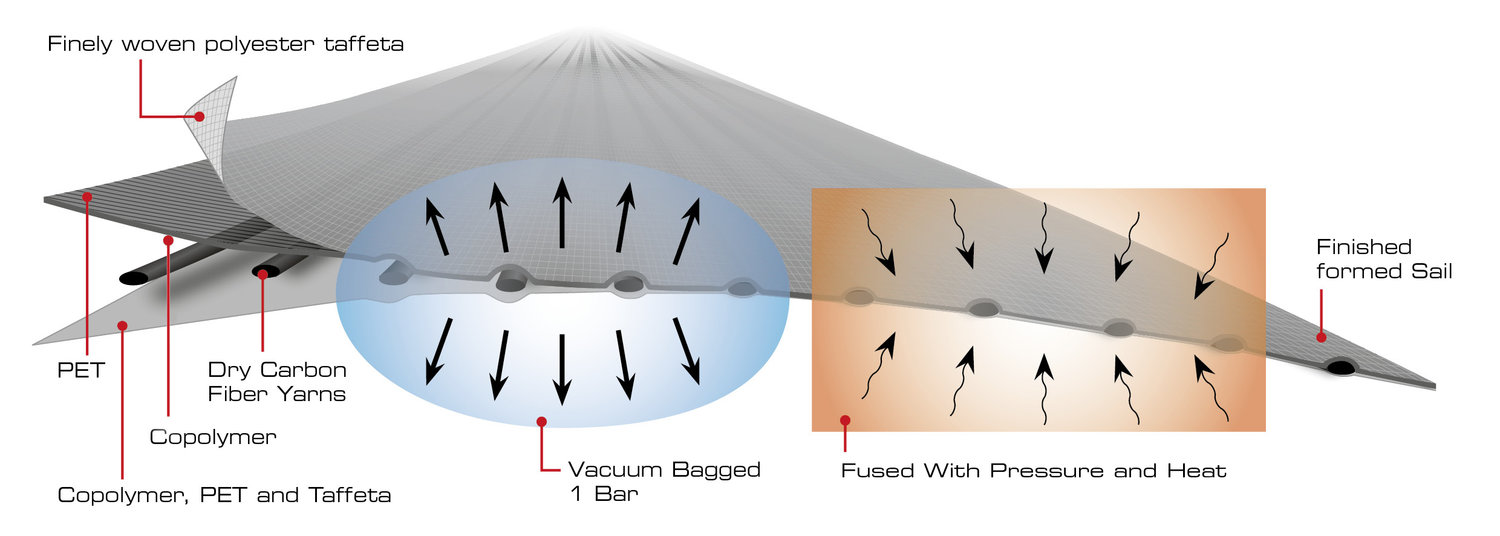
Titanium sails are made with a grid of continuous carbon load-path yarns running unbroken between the three corners of the sail, laminated between two layers of 3D-shaped film. The yarns are laid dry — without glue — to save weight and keep the carbon from becoming brittle. The films are tacky on the inside from a copolymer coating, which holds the yarns and films in place until lamination.
The five layers — taffeta, film, load-path yarns, second film, taffeta — are dropped into a custom-formed, variable-geometry thermoform, where the sail is heated and UV-bonded under vacuum into a one-piece finished membrane.
Not coating the yarns with glue makes the sail lighter (by 15–30%), more flexible, and more durable — which makes for happier foredeck crews and owners who aren’t replacing misshaped, broken sails as often.
Yes, there are seams in a Titanium sail, but they’re only there to shape the film. Unlike most high-tech sails, where the structural yarns run only the width of a panel, a Titanium sail’s continuous yarns eliminate seam loads, load-induced distortion, wrinkles, and seam failure. The result is smooth and wrinkle-free.
Extra Durability With Taffeta
Titanium sails are already very strong; the Double-Taffeta version adds a finely woven polyester taffeta laminated to both sides. The taffeta doesn’t add strength — it protects the film from the abrasion a cruising sail lives with, from the spreaders to the foredeck to furling. That protection is a real benefit for cruisers. It comes in white or grey.
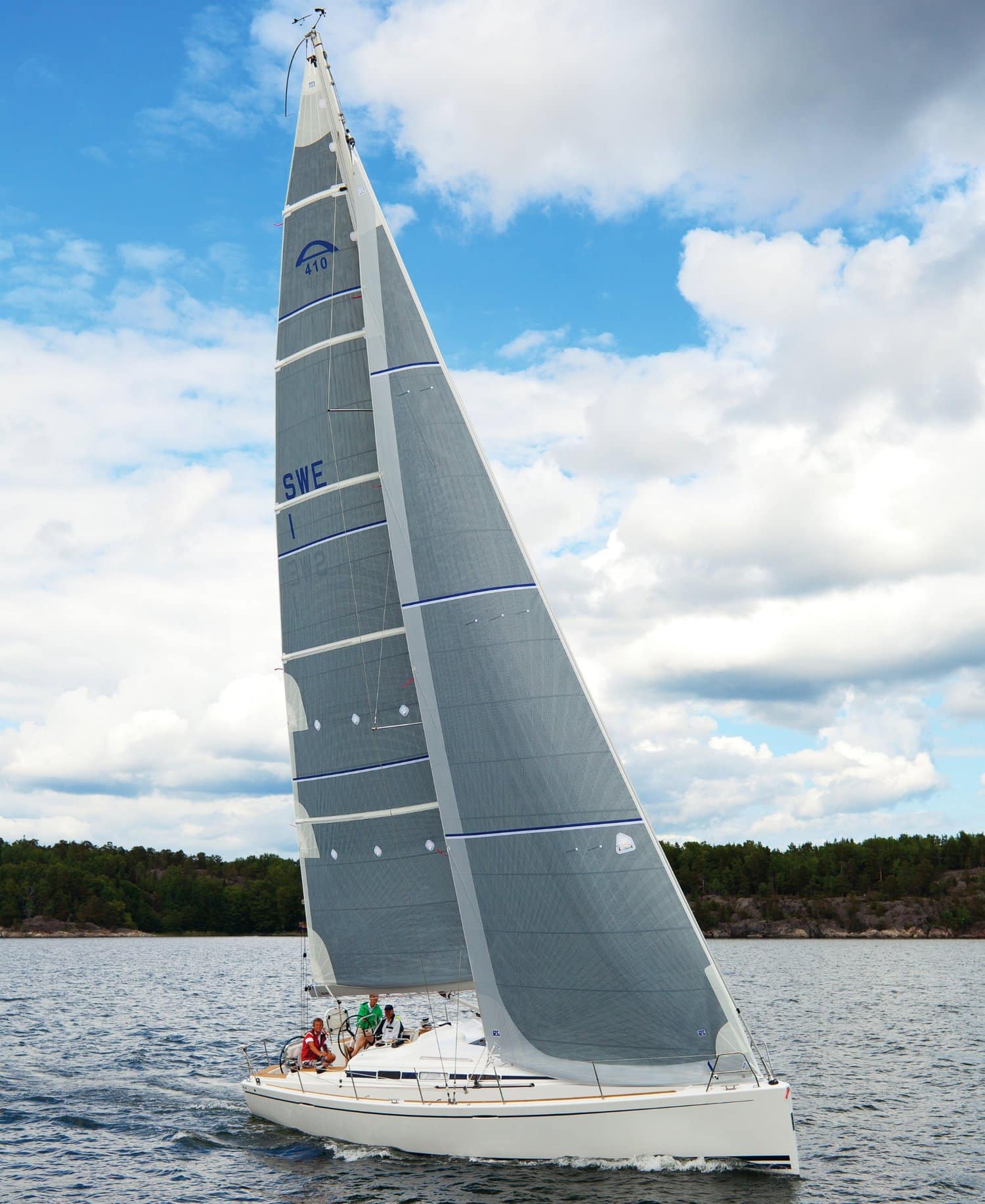
Available Details
Available with:
- Non-overlapping
- Overlapping
- Horizontal Battens
- Vertical Battens
- Telltales
- Draft Stripes
- Sail Numbers
- Leech Line
Roller Furling:
- Passagemaker
- Roller Furling Genoa
- UV Luff/Foot Cover
- Foam Luff
- Reefing Reinforcements
FAQs
What is a Titanium Double Taffeta sail?
It’s a membrane sail built as a five-layer sandwich: a grid of continuous carbon load-path yarns laid dry between two layers of shaped film, with a finely woven polyester taffeta laminated to each outside face. The whole thing is heated and UV-bonded under vacuum into one smooth, wrinkle-free piece.
Why do continuous load-path yarns matter?
In most paneled sails the structural yarns run only the width of each panel, so the loads have to cross the seams. In a Titanium sail the carbon yarns run unbroken between the three corners, following the actual loads — which eliminates seam loads and the distortion, wrinkling, and seam failure that come with them. The sail holds its designed shape far longer.
Why are the yarns laid dry, without glue?
Skipping the glue keeps the carbon yarns from going brittle and drops weight by 15–30%, for a lighter, more flexible, more durable sail — easier on the crew and longer-lived for the owner. The films are tacky on the inside from a copolymer coating, which holds everything in place until the final lamination.
What does the taffeta do?
The woven polyester taffeta on both faces doesn’t add strength; it protects the film from the abrasion and handling a cruising sail sees — against the spreaders, on the foredeck, and through the furler. That protection is exactly why it’s a great cruising choice. It’s available in white or grey.
Is Titanium a good choice for a furling genoa?
Yes. It’s lighter and holds its shape better than heavy multi-ply Dacron or radial laminates, and the taffeta on both faces gives it the abrasion resistance cruising and furling demand. Built as a Passagemaker furling genoa it comes with a foam luff for better shape when reefed, reef reinforcements on the foot and leech, and sewn-on UV leech and foot covers to protect the sail while it lives on the headstay.
