
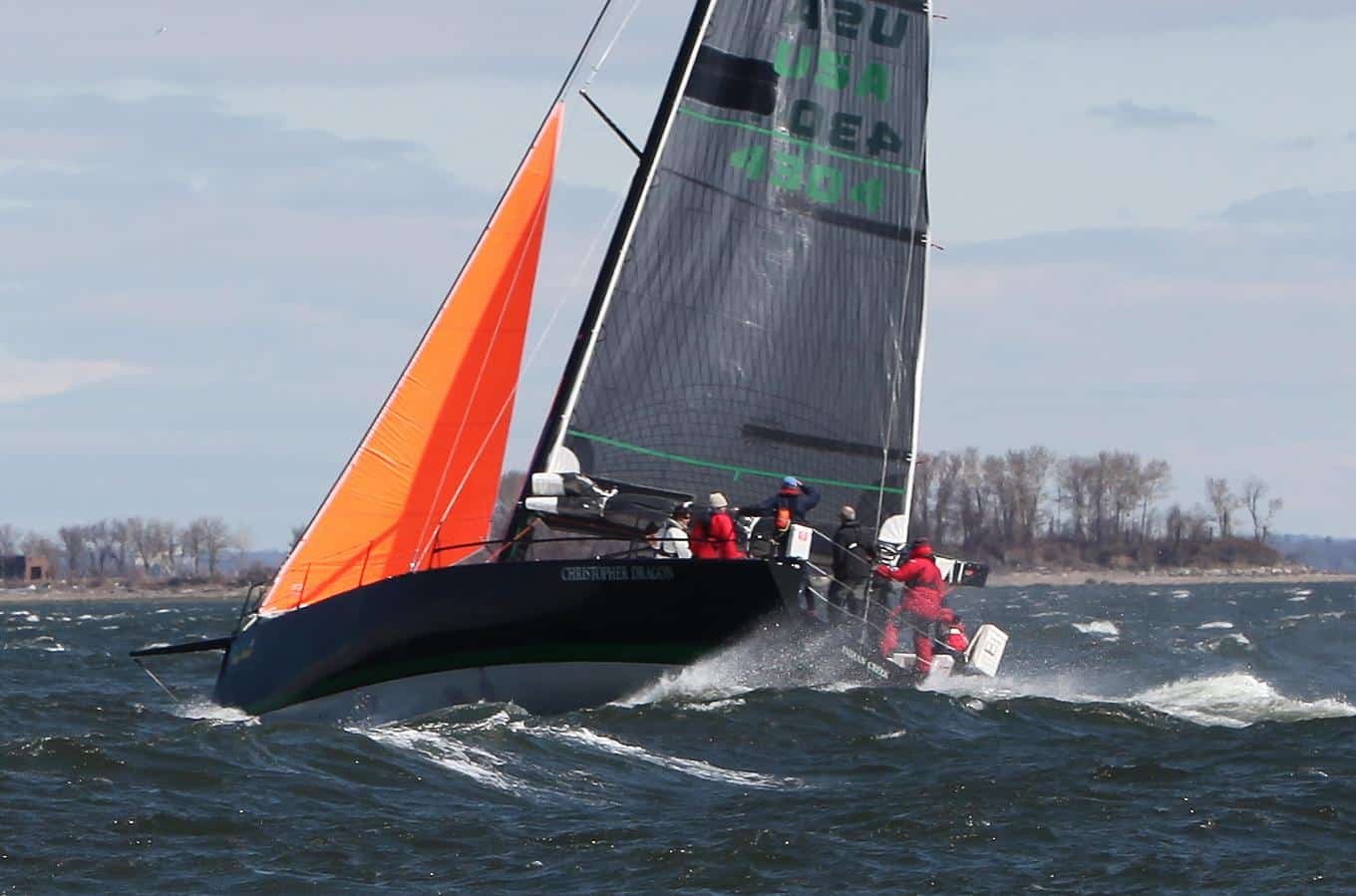
STORM SAILS
Bullet-proof, compact, and bright orange — the heavy-weather sail that flies in place of your mainsail when the wind tops 45 knots.
What Is a Storm Trysail?
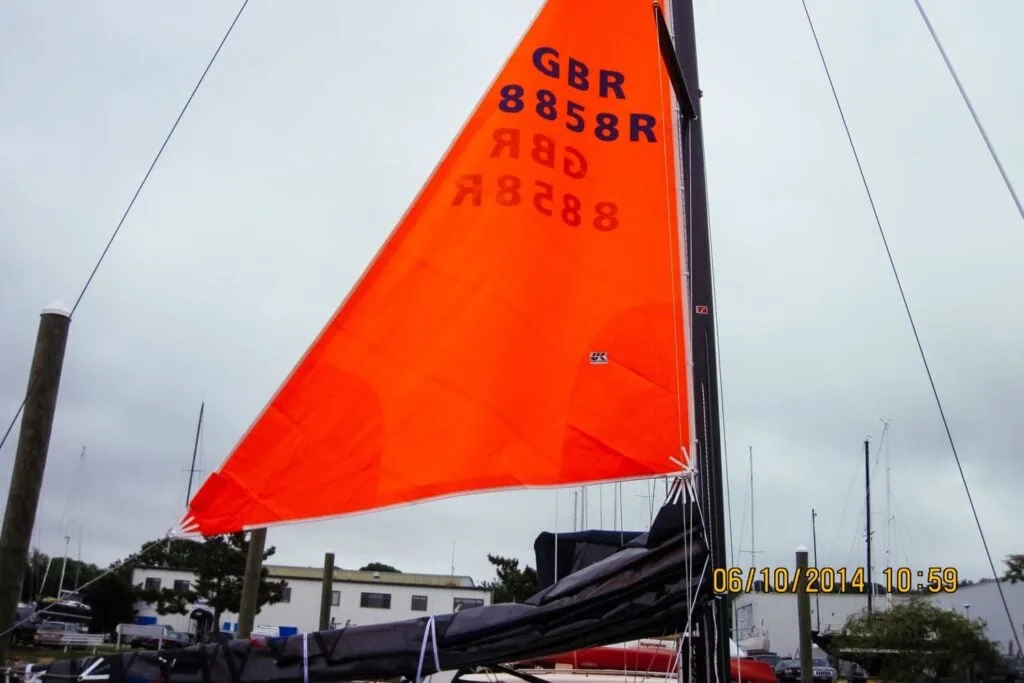
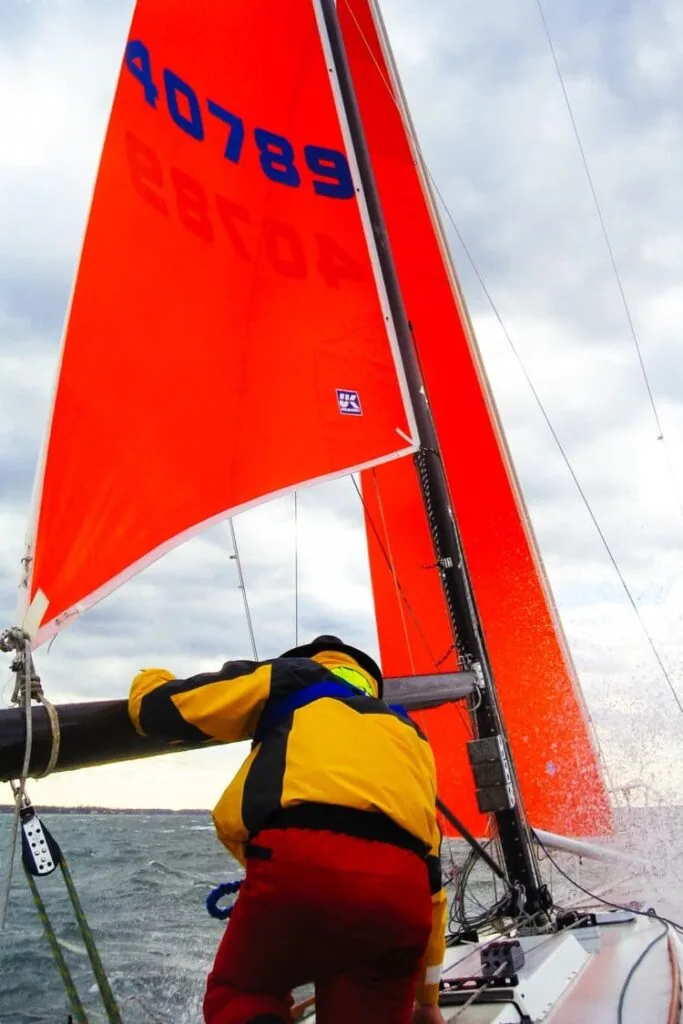
Bullet-proof, small, and bright orange, a storm trysail is built to save a boat's mainsail in winds over 45 knots. It flies behind the mast — a short, triangular sail with a "droopy clew" that sheets to the deck or the boom. World Sailing's rules require that it carry no headboard or battens, since those hard parts could badly injure someone while the sail flogs in a gale; instead, the leech and foot are cut concave to keep the unsupported edges from fluttering. It's made from strong woven polyester in a high-visibility color, so your boat stands out in the worst conditions.
A trysail has a permanently attached pennant so it can be set above the gooseneck; the exact tack height depends on whether you sheet to the aft quarter or to the boom. Its area can be no more than 0.175 × P × E (mainsail luff × foot). If you ever plan to carry one, it's best to fit a separate track on the mast — in a gale it's difficult and dangerous to strip the mainsail off the mast to bend on the trysail, and flying the trysail protects the main you'll need again once the storm passes.
Protects Your Mainsail
Built for winds over 45 knots
In a survival gale the trysail flies in place of your main — sparing the sail you'll need the moment the storm passes.
Safe by Design
No battens, no headboard
Offshore rules ban hard parts that could injure crew while the sail flogs; a concave leech and foot keep the free edges from fluttering.
Highly Visible
Bright Storm Orange
Made from strong woven polyester in a high-visibility color, so your boat stands out to rescuers in the very worst conditions.
Design & Construction
A storm trysail is built with safety features and construction requirements that set it apart from an ordinary sail:
- Material: strong woven polyester (Dacron), or HMPE fibers
- Color: high-visibility shades — typically bright orange, pink, or yellow — for safety
- Shape: triangular, with a distinctive "droopy clew" and a concave leech and foot
- Size: no more than 17.5% of the mainsail area (0.175 × P × E)
- Attachment: a permanent pennant for setting above the gooseneck
- No battens or headboard: no hard parts that could injure crew in high winds
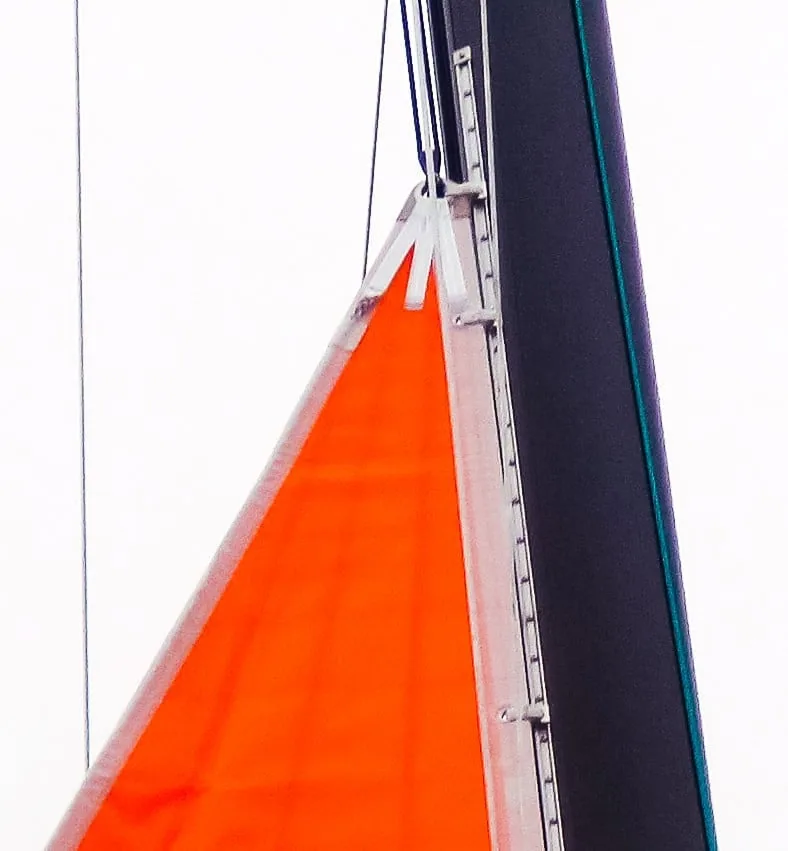
UK Sailmakers webs two slides onto the head and tack to spread the load at these highly stressed points; for a bolt-rope track, we fit a 3-inch stainless steel slide at the head and tack.
Setting It: Track & Sheeting
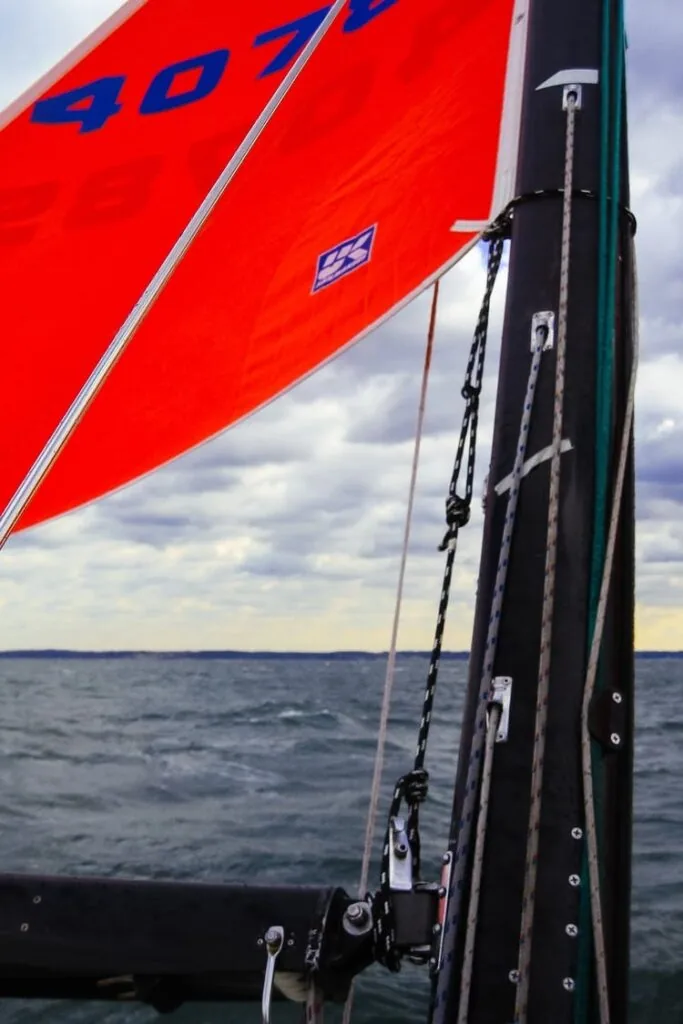
A separate track on the mast is strongly recommended for a storm trysail. It lets you deploy quickly as conditions deteriorate, with no need to remove the mainsail in dangerous weather — which means less risk during the sail change and better safety for the crew. From there, the trysail can be sheeted either to the aft quarter of the deck, or to the boom with the pennant height adjusted to suit. When the clew is attached to the boom, you can use the main sheet to trim the sail.
When to Use a Storm Trysail
Reach for the trysail when the weather has moved past what reefing can handle:
- Wind speeds over 45 knots
- To protect your mainsail in severe conditions
- When standard sail reduction (reefing) is no longer enough
- During sustained gale conditions
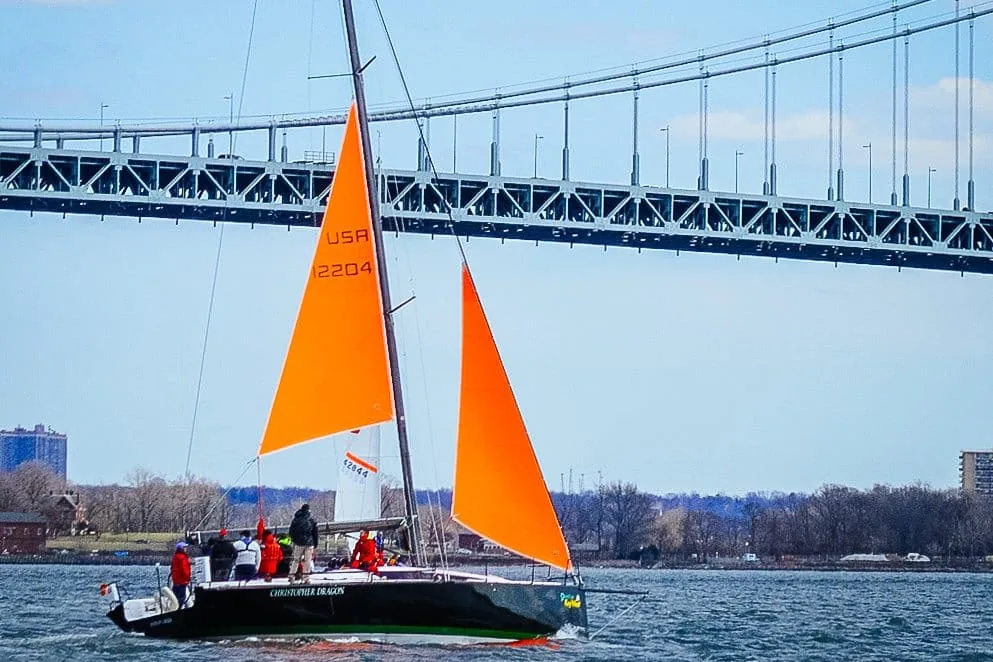
The "droopy clew" lets the tack be raised above the stack of mainsail luff cars when the sail is left on the boom — so the trysail sets cleanly above a flaked-down main.
Be Ready Before You Need It
A storm trysail is a safety investment you hope to rarely use — but its value in a gale can't be overstated. Inspect the sail material and stitching regularly, check the pennant and attachment points each year, keep the track and hardware well maintained, and stow the sail somewhere you can reach it fast. Most important: practice setting it in moderate conditions, not when you actually need it. Regular drills and proper care are what ensure this sail performs when the weather turns serious.
Get A Quote Today!
Talk to your local loft about a storm trysail sized to the 0.175 PxE rule and built for your mast and track.
QuoteFAQs
Why doesn't a storm trysail have battens or a headboard?
Safety. In high winds, hard parts like battens or a headboard can become dangerous projectiles if the sail flogs and injure crew. The trysail makes up for leaving them out with its shape — a concave leech and foot that keep the free edges from fluttering.
How is the correct size determined?
By the formula 0.175 × P × E, where P is the mainsail luff length and E is the mainsail foot length. A trysail's area can't exceed 17.5% of that figure, which keeps it properly proportioned to your boat.
Why use a storm trysail instead of a deeply reefed mainsail?
It's purpose-built for survival conditions: it protects your valuable mainsail from damage, holds better shape in heavy weather, and can be set on its own track for safer, faster deployment — without wrestling the main off the mast in a gale.
Do I need a separate track on the mast?
It's strongly recommended. In a building gale it's difficult and dangerous to strip the mainsail off the mast to bend on the trysail; a dedicated track lets you hoist the trysail quickly while the main stays put.
Does it have to meet racing rules?
For racing, the trysail must comply with World Sailing's Offshore Special Regulations, which set requirements for material, size, visibility, construction, and how the sail attaches to the boat.
Other Sails To Consider
Other storm sails
Heavy Weather Jib/No. 4 Genoa
STORM SAILS Bigger than a storm jib and built to keep pointing in a blow — the heavy-weather headsail, or No. 4 genoa, that bridges the gap between your everyday sails and…
Storm Jib
STORM SAILS A small, rugged heavy-weather headsail for when the wind outstrips even your smallest jib — flown high on a pennant to keep driving the boat above the waves. Talk…