
CRUISING SAILS
Cruising mainsails
Your mainsail is the most tireless worker on your boat — flying every day you leave the harbor, from glass calms to 30 knots reefed down. We build them five ways, from premium Dacron to Titanium membranes, so the sail matches your boat, your waters, and your budget.
Photo © UK Sailmakers
FIVE BUILDS, ONE JOB
Compare the builds.
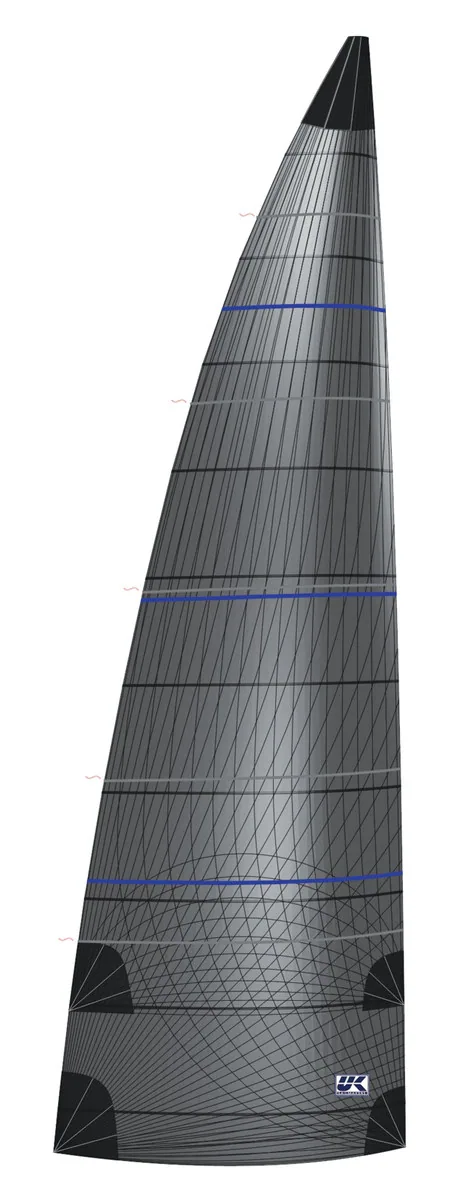
Titanium Double Taffeta
Our lightest-weight performance cruising sail.
Construction: Molded membrane with carbon load-path fibers running corner to corner over a Technora scrim; Lite Skin, white or grey taffeta both sides.
Shape stability ★★★★★
Durability ★★★★☆
Price band $$$$$
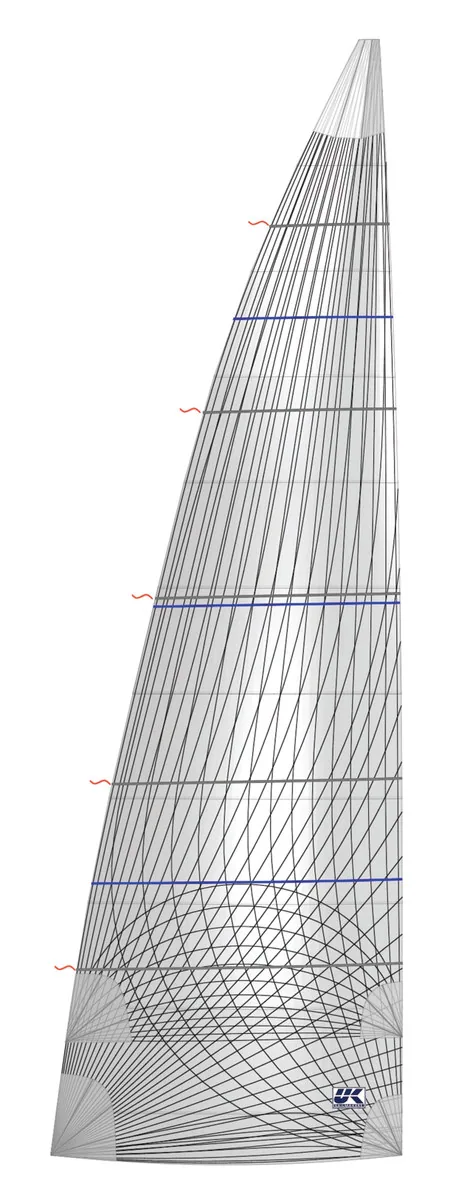
X-Drive® Taffeta
Load-path reinforced performance cruising laminate.
Construction: Lightweight cross-cut laminate reinforced with corner-to-corner carbon or S-Glass yarns bonded to the sail; taffeta or Lite Skin on one or both sides.
Shape stability ★★★★☆
Durability ★★★★★
Price band $$$
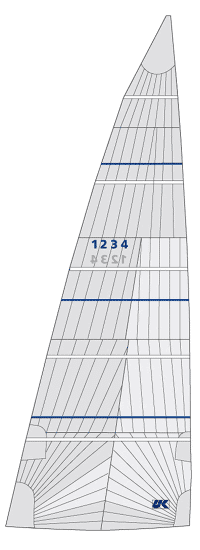
Hybrid Woven
Premium wovens reinforced with UHMWPE fibers.
Construction: High-tenacity polyester with UHMWPE, built cross-cut (Voyager) or tri-radial (Hydranet, Fibercon Pro) to orient fibers along primary load paths.
Shape stability ★★★★☆
Durability ★★★★★
Price band $$$–$$$$
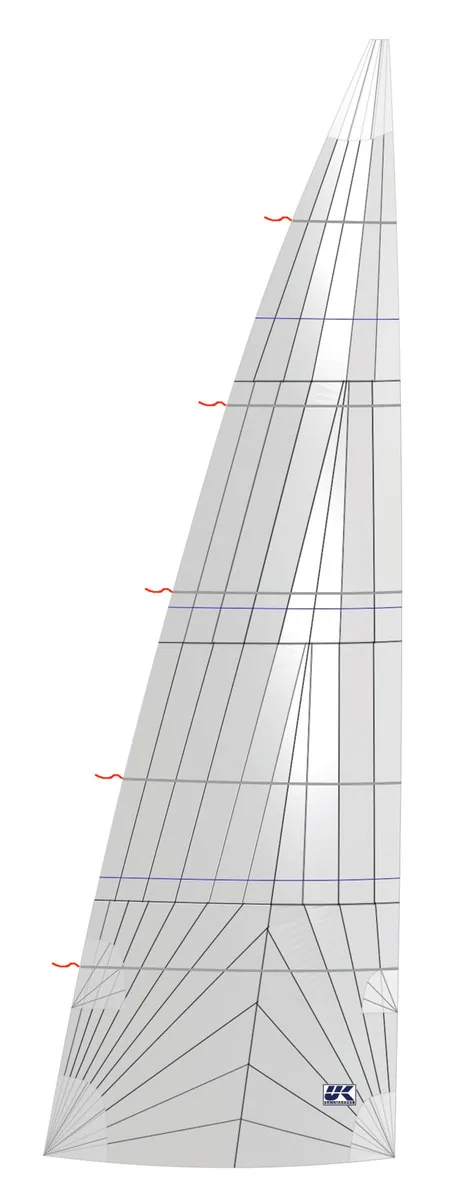
Radial Taffeta
Tri-radial panel layout for better shape holding.
Construction: Long, narrow panels radiate from the three corners along the load paths — the narrower the panels, the better the shape-holding. Taffeta both sides.
Shape stability ★★★☆☆
Durability ★★★☆☆
Price band $$$–$$$$
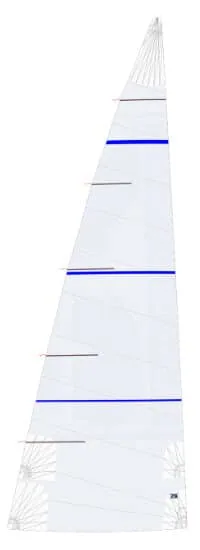
Dacron
The most economical sail for cruising and daysailing.
Construction: Cross-cut woven polyester panels — the most efficient use of sailcloth, which keeps costs down. White, tanbark, or cream.
Shape stability ★★☆☆☆
Durability ★★★★☆
Price band $
WHICH BUILD FOR WHICH BOAT
Match the material to your sailing.
A rule of thumb, not a rulebook — your loft will fine-tune for your rig, your waters, and how hard you push.
| MATERIAL | BOAT SIZE | BEST FOR |
|---|---|---|
| Dacron | 20–35 ft | Daysailing and coastal cruising on a budget |
| Radial Taffeta | 25–40 ft | Coastal cruising with better shape-holding |
| Hybrid Woven | 30–55 ft | Offshore and charter-tough bluewater cruising |
| X-Drive® Taffeta | 25–45 ft | Coastal cruising with club-racing crossover |
| Titanium Double Taffeta | 35–70 ft | Performance cruising and fast passage-making |
Even our most economical Dacron sails are built to a higher standard than off-brand sails: proper-sized corner and reef patches, premium hardware, and UV covers applied last to protect corner webbings and stitching.
Shape-holding counts double on a furling rig. As a sail stretches it gets fuller and the draft moves aft, and on in-mast furling rigs a baggy sail is the most common cause of jams when rolling in and out — which is why cloth choice matters more, not less, behind a furling mast or boom.
Ready for a price?
Three quick steps — your local loft will reach out as soon as possible.
Request a QuoteRather talk it through?
Every loft is owned by the sailmakers inside it. Call yours and talk to the person who'd build your sail.
Talk to your loftNew to sail buying?
Start with the Encyclopedia of Sails — how sails work, what materials do, and what to ask for.
Learn the basicsFurling mast or boom?
In-mast and in-boom mains are built in the same five cloths, custom fit to your spar. Batten configuration decides the shape you get.
Furling mainsails