
CRUISING GENOAS & JIBS
Dacron
The most economical furling headsail — cross-cut Dacron with UV cover, foam luff options, and premium hardware.
Photo © UK Sailmakers
Most economical
Cross-cut panels make the most efficient use of the cloth — the best price of any build we make.
Built properly anyway
Proper-sized corner and reef patches, premium hardware, and UV covers applied last, over the webbings and stitching.
Classic looks
White, tanbark, or cream — the traditional cloth for traditional boats.
HOW IT'S BUILT
The honest workhorse.
Woven polyester — best known by DuPont’s trademark Dacron — remains the most economical sailcloth, and cross-cut panel construction makes the most efficient use of it, which is what keeps the price down.
Even at the entry price, UK Dacron sails are built to a higher standard than off-brand alternatives: properly sized corner and reef patches, premium hardware, and UV covers that go on last, covering the corner webbings and stitching rather than hiding under them.
AT A GLANCE
Appearance White, tanbark, cream
Shape stability ★★☆☆☆
Durability ★★★★☆
Price band $
ISL upgrade Not available
HOW IT LOOKS, HOW IT WORKS
Dacron in detail.
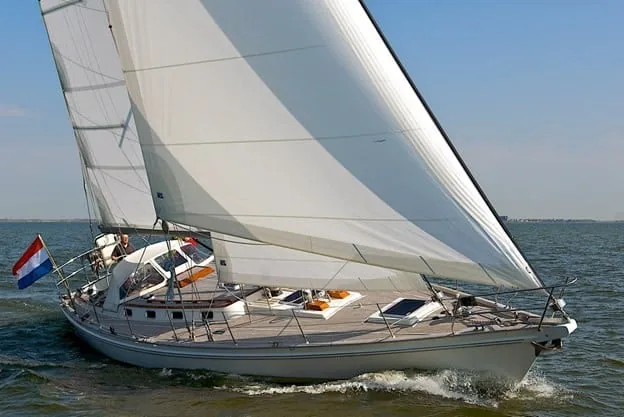
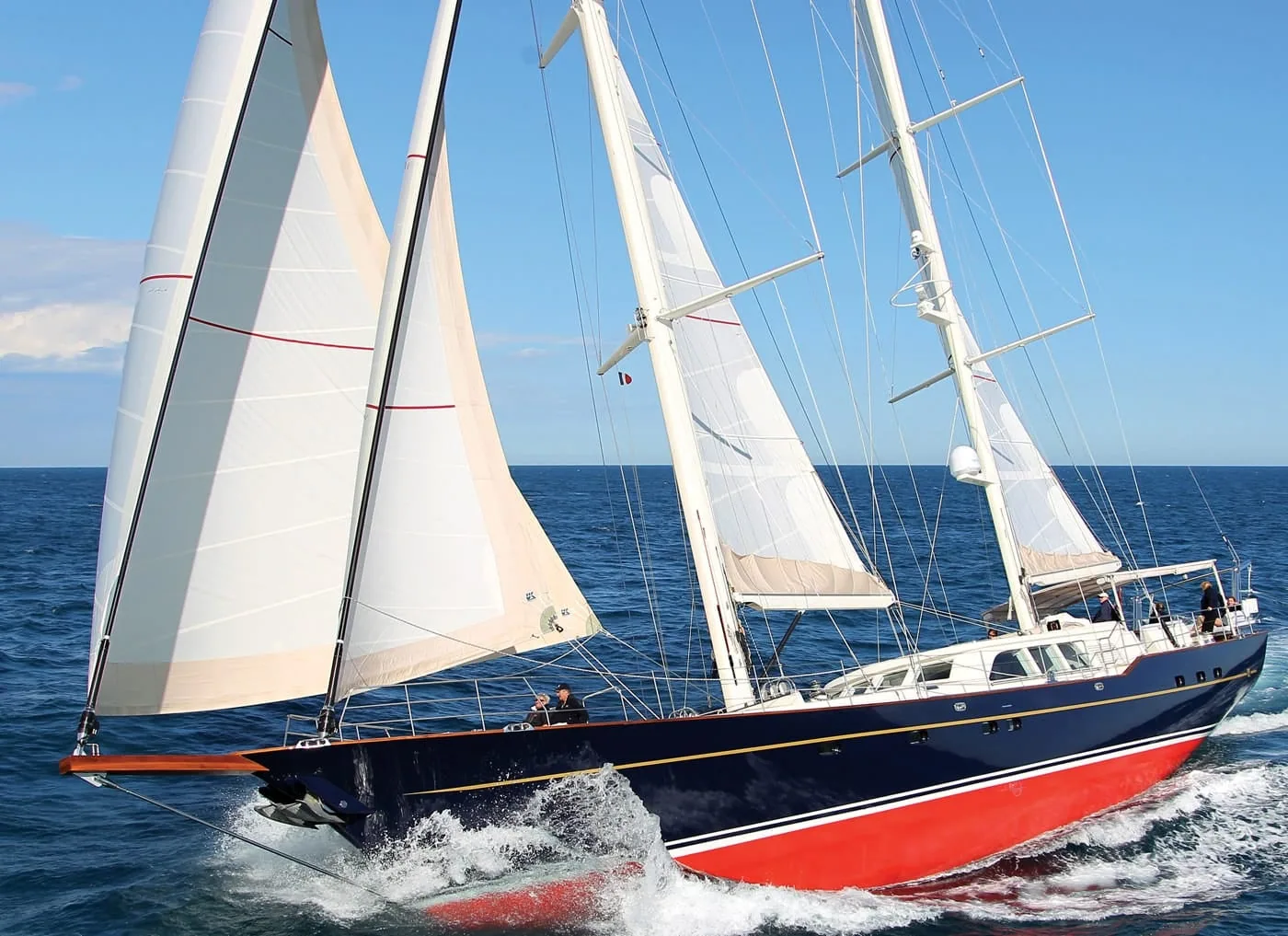
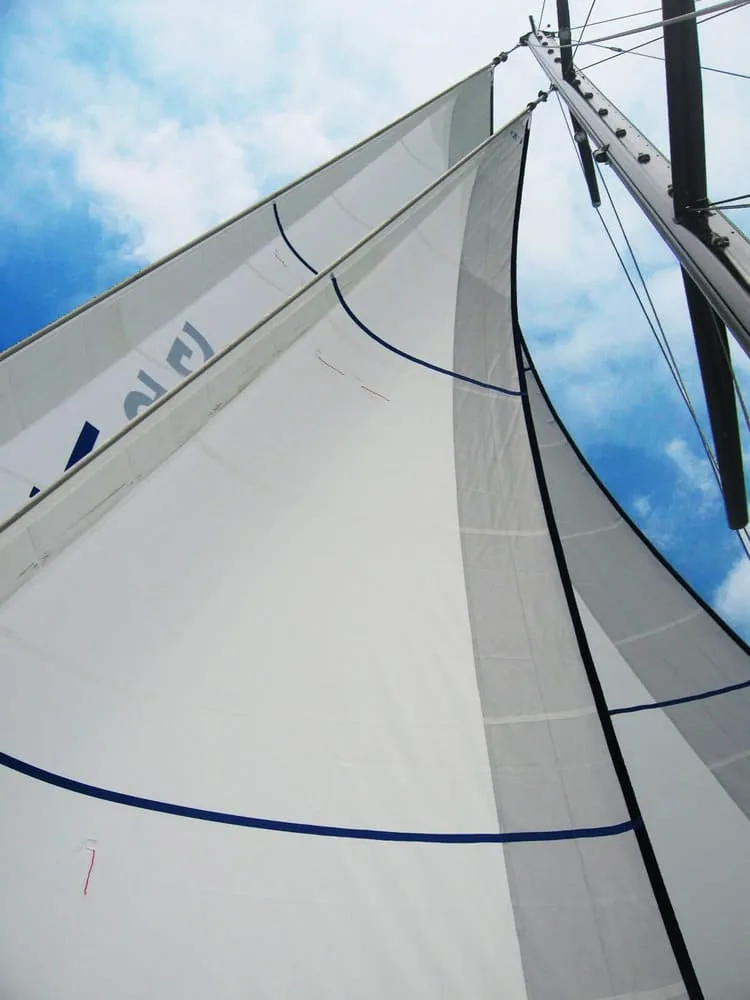
Photos & diagrams © UK Sailmakers
QUESTIONS SAILORS ASK
FAQs
Yes. Dacron is one of the most durable sailcloths going — resistant to chafe (which matters for an overlapping genoa), UV, and the constant bending and folding a cruising sail sees, so it stays sound for many seasons. The trade-off is shape, not strength: polyester stretches more than high-tech fibers, so the sail gradually loses its designed shape even while the cloth itself stays intact.
Cross-cut runs the panels horizontally, perpendicular to the leech, using fill-oriented cloth so the strongest yarns line up with the highest loads — which run up and down the leech. It’s the most efficient, nearly wasteless layout, which keeps cost down. Radial genoas align the yarns with the loads from all three corners for better shape-holding, at a higher price. For value and durability, cross-cut Dacron is hard to beat.
Structurally, many seasons with good care. Its useful shape life is shorter than its structural life — it’ll hold together long after it has stretched past its best shape. On a furling genoa, a sewn-on UV cover (and rinsing the salt off) makes a big difference, since the sail lives on the headstay in the sun all season.
Less than a laminate. Because the cloth is woven rather than film-based, it breathes and doesn’t trap water the way a laminate can, so it’s less prone to mildew — useful in damp or humid climates. Still, let it dry before long storage.
Sunlight is a furling headsail’s worst enemy. Most cruisers add sewn-on UV leech and foot covers (Sunbrella or WeatherMax). For less weight aloft, a separate jib sock that zips over the furled sail is an alternative. Built as a Passagemaker, the sail also gets a foam luff for better shape when reefed and reef reinforcements on the foot and leech.
Other cruising genoas & jibs builds
Same sail, different construction — compare them all.