Whether you’re preparing for your first offshore race or renewing your rating certificate, understanding how your sails are measured is essential. That’s why we’ve put together a handy visual reference guide covering the key measurements used across IRC and ORC rating systems.
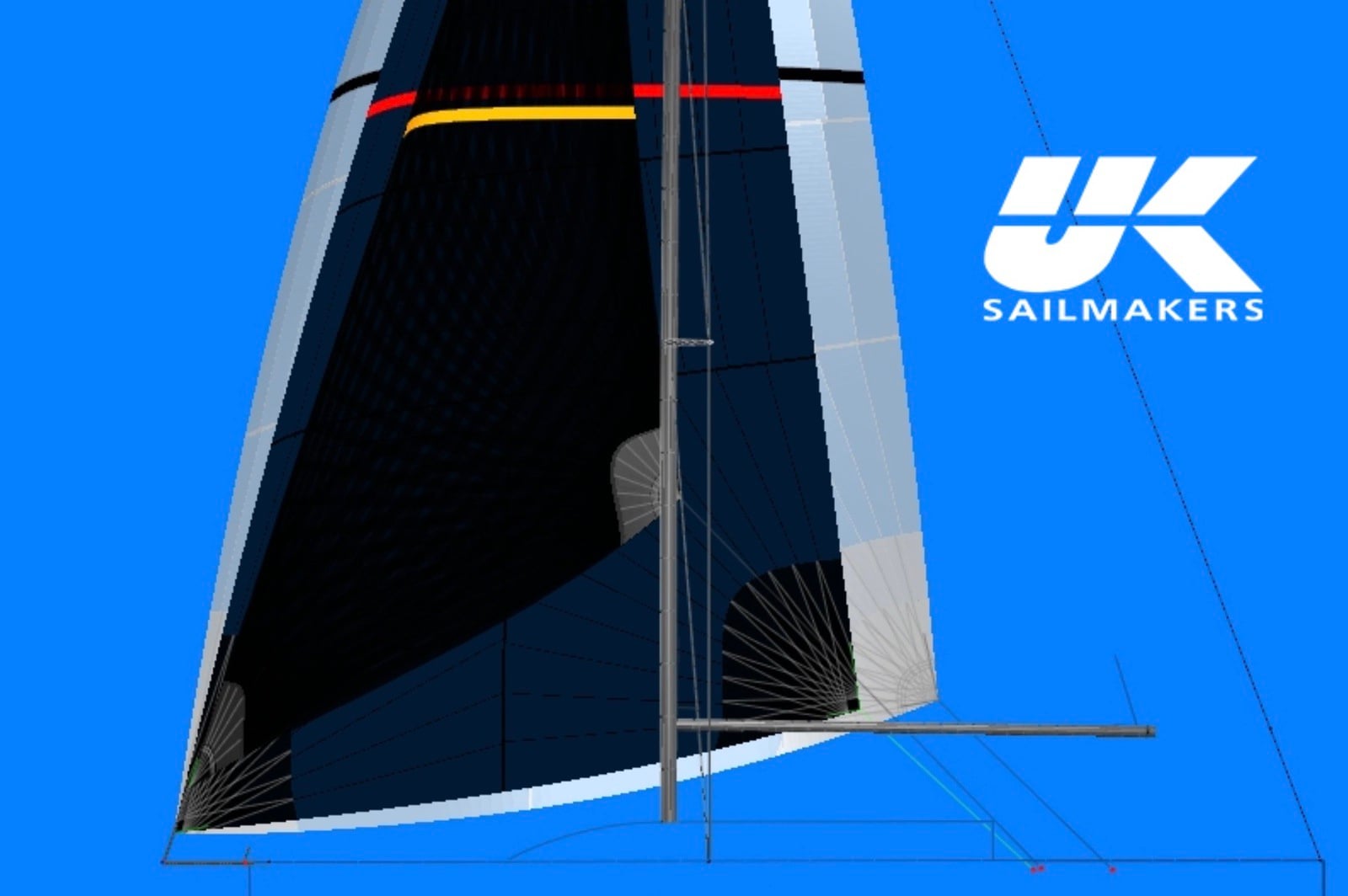
The guide covers six sail types you’re likely to encounter in your sail inventory: mainsail, headsail, flying headsail, code zero, asymmetrical spinnaker, and symmetrical spinnaker. For each one, clearly labelled diagrams show exactly where measurements are taken, from the luff, leech, and foot lengths through to half-widths, quarter-widths, and so on. It’s a practical tool whether you’re working with your sailmaker, a measurer, or just want to double-check your own numbers. Keep it in your nav station or save it to your phone for easy reference.
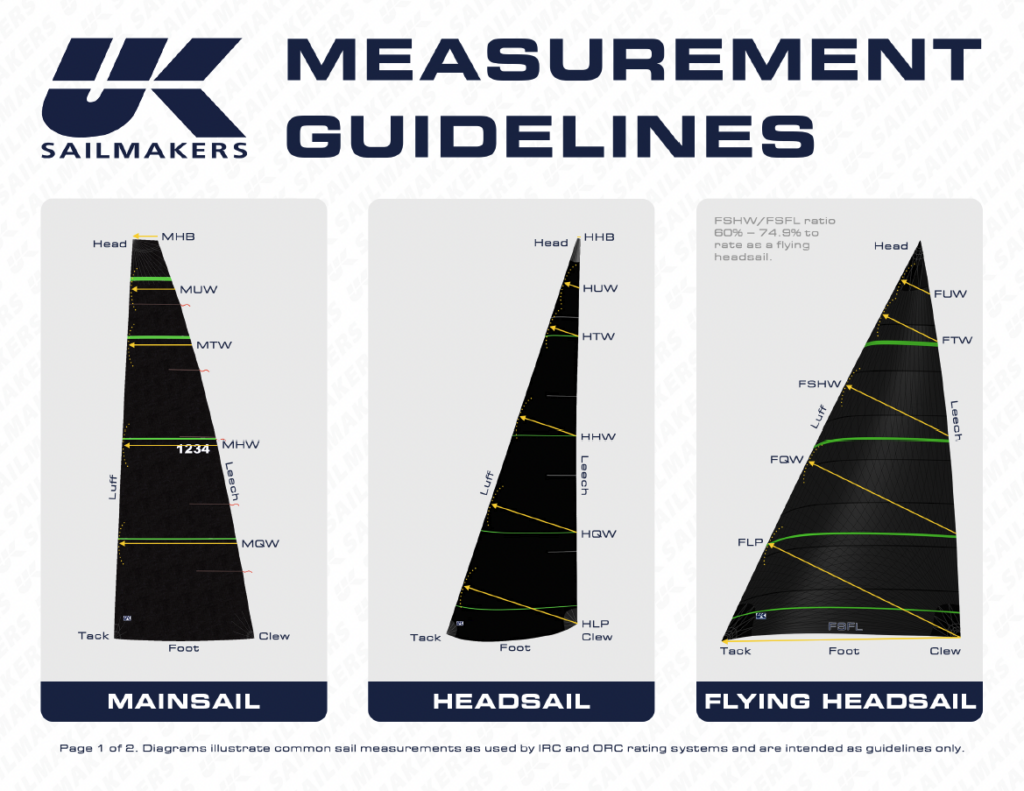
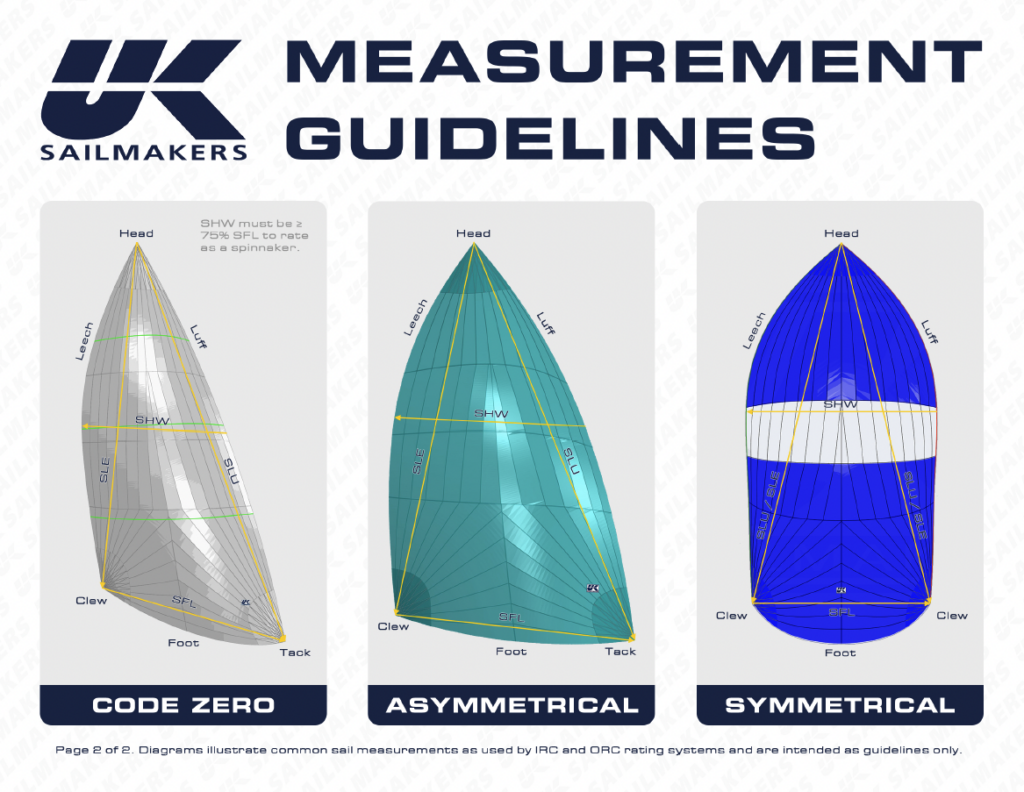
A few things to keep in mind when measuring
For official IRC and ORC certificates, sail measurements must be recorded in metric (metres to two decimal places) and taken by an approved measurer or qualified sailmaker. Sails should be clean and dry before measuring. A few additional tips to ensure accurate and consistent results:
- Remove any battens before measuring.
- Some sail materials can shrink or stretch over time, so it’s good practice to check your measurements annually.
- For spinnakers, half-widths are measured from the midpoint of the luff and leech. Making a small mark at these points makes future measurements quicker and more consistent.
Please note: diagrams illustrate common sail measurements as used by IRC and ORC rating systems and are intended as guidelines only. Always consult your class rules or rating authority for definitive measurement requirements.
Download the full size UK Sailmakers Measurement Guideline Sheets here.