Recently, I was asked what makes a great sailing leader. How do you effectively manage a boat and campaign as an owner or skipper in a way that leads to both success and enjoyment on the water?
This kind of leadership is not the abstract, boardroom kind. It is real, gritty, salt-in-your-face leadership, where the so-called “soft skills” of working well with a team are just as important as technical know-how. Over the years I have worn a lot of hats: competitive racer, sailing instructor, sailmaker, and now General Manager at UK Sailmakers International. Each of those roles has taught me something about what it means to lead, and what it looks like when leadership goes wrong.
Whether you are skippering a weeknight club race or running a serious offshore campaign, the principles are surprisingly consistent. Here is what I have learned so far.
Set the Example for Your Crew
The best leaders I have sailed with have one thing in common. They do not sit back and bark orders. They are in it with you. They are the first on the dock, the last to leave, and they never ask anyone to do something they would not do themselves. That includes the basics, like helping with the post-race rinse-down and making sure everyone knows where the safety gear is and how to use it. It also means running and participating in crew overboard drills, even after a long day of racing.
One small example is that I always wear my PFD on deck while racing. Not just at night, not just offshore, and not only when the rules require it. Always. Even in the heat of summer and light air when I am sweating. I have been on boats where it was “uncool” to wear one, and that pressure can be enough to stop someone from making the safer choice. I have thick skin and do not mind the odd jab, so if wearing mine helps even one person feel more comfortable doing the same, it is worth it.
Leadership on a boat is not just about authority. It is about trust and reliance on each other. That trust is built through consistency and example, not a title on a crew list.
Psychological Safety: The Secret Weapon of Fast Boats
One of the clearest differences between a great team and an average one is whether the crew feel safe speaking up, especially to the skipper. On a psychologically safe boat, someone can say “I think we are overstanding” or “that spinnaker sheet looks chafed” without hesitation. On an unsafe boat, people stay quiet, and quiet costs boat speed. Or worse.
Create an environment where your crew knows that if they see something, they should say something. Leading with intimidation or ego is poor leadership.
Teaching sailing to people with a wide range of experience and ability changed how I think about this. I had to constantly challenge my assumptions about what people could contribute and how they communicate. Time and again, the people I initially underestimated had the sharpest attention to detail and the most creative problem-solving. Fresh eyes often catch what veterans stop noticing.
A good skipper is not necessarily the loudest voice on the boat, but should always be the clearest. They listen to input like “puff in ten boat lengths” or “the boat ahead just tacked,” then turn that into decisive action and clear communication.
Putting People in the Right Roles
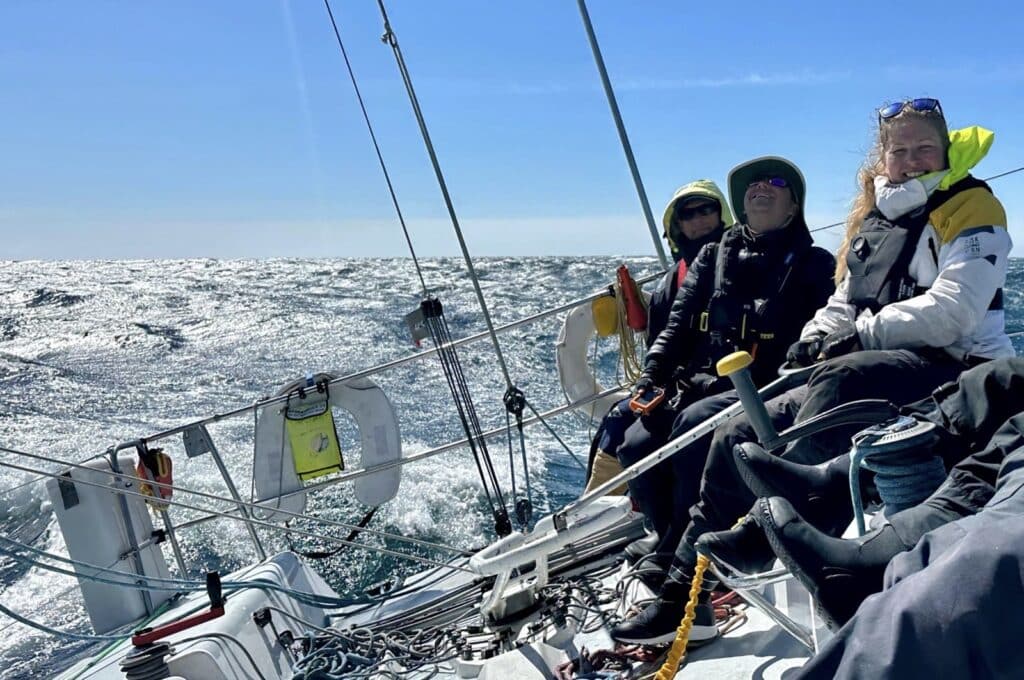
Crew assignment is one of the highest-leverage decisions a skipper makes, and it is often done poorly by defaulting to seniority or friendship. What matters just as much as skill is temperament. Your most detail-oriented crew member belongs in a role where that matters: tactics, navigation, trim. Your calmest and steadiest person belongs at the helm when things get squirrelly.
On longer races, rotating positions is important to maintain focus and avoid physical strain. Set up watches properly and make sure people are getting enough food, water, and rest to perform at their best. Whatever roles you assign, make sure everyone understands at least one other job. Avoid single points of failure.
Standards should be consistent for everyone. No one should get special treatment or be allowed to behave disrespectfully. The rest of the crew will notice.
One tool I have found genuinely useful is a simple crew spreadsheet. List primary and secondary roles, personality notes (who clashes, who works brilliantly together), what each person wants to learn, and even a fun fact or two. It may sound corporate, but it works. It forces you to think about your people instead of just filling crew positions.
How to Divide the Work (and the Expenses)
Running a campaign, or even a season of club racing, involves a lot of unglamorous work: maintenance, provisioning, repairs, logistics. How you handle this says a lot about your team culture.
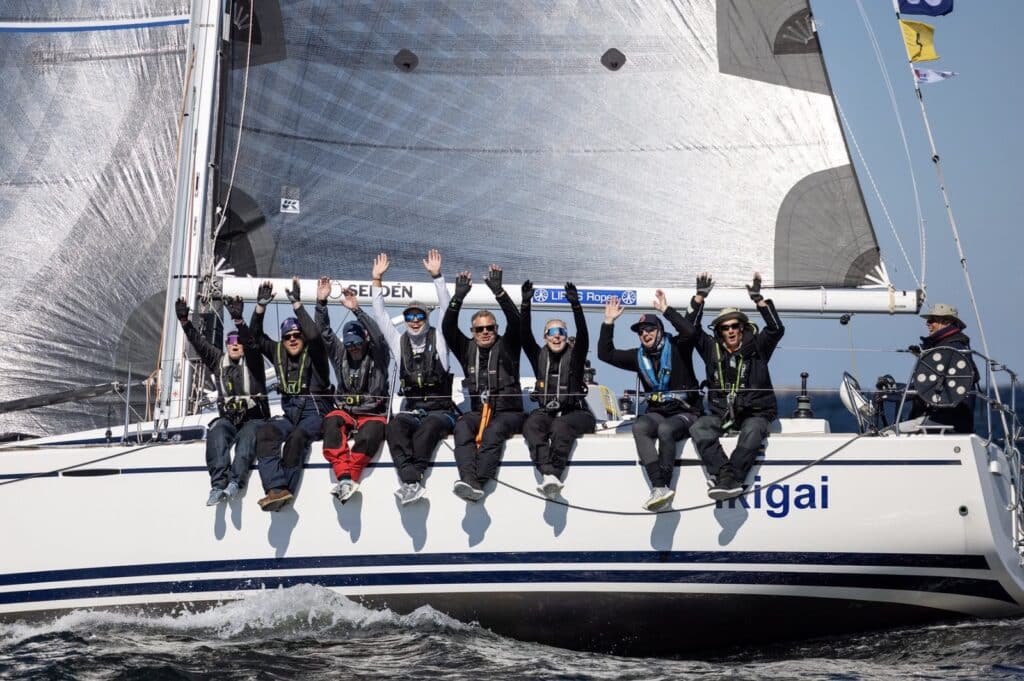
I have been on boats where the owner covers everything. That can work well, but it can also create imbalance, where crew feel more like passengers. It can also limit the campaign. When crew chip in, even a little (whether it’s $20 toward a weekend’s meals or a bigger share of work or expenses in a year-long campaign), they have skin in the game. They care more, and understand the boat better.
If you go this route, be transparent. Be clear about what the money is for and what happens to any leftovers. Return it or spend it on a crew event, both are fine, just decide in advance.
The same goes for maintenance. A simple sign-up sheet with tasks, dates, and estimated hours works well. Something like everyone committing to a certain number of hours of prep keeps things fair and prevents the same two people from doing everything. At the same time, know when to bring in professionals if the job is beyond your experience.
A group chat with pinned messages for tasks, documents, and race prep helps keep everyone accountable and cuts down on confusion.
Preparation Is Leadership
Coming from a sailmaking background, I will say this plainly: most equipment failures during a race are preparation failures. A blown seam, fraying halyard, or jammed furler is usually something that was noticed and pushed to “after the race.”
Before a distance race, I strongly believe in team briefings. Not one person reading a forecast and announcing a plan, but the whole team looking at the data, asking questions, and raising concerns. The same applies to “what if” scenarios. What happens if the wind shifts before the start? Are we ready to reef quickly if the breeze builds?
Take that information and act on it. Stack sails below with the most likely ones accessible. Install or adjust battens ahead of time. Do it now, not while scrambling for a sail change.
On the motor out, review weather, current, and tides together. Talk through the course and focus on the start, the first leg, and initial crew positions. Encourage questions.
Post-race debriefs are just as important. Give everyone the chance to share what worked, what did not, and what they learned.
Teams that talk through these situations ahead of time respond calmly when they happen. Train for real conditions, not just ideal ones. Train in the dark, in wind and rain, and in different roles.

What the Off-Season Is Actually For
Most sailors treat the off-season as downtime. The best teams treat it as an investment. Fitness matters, but team cohesion matters just as much. Get together for something unrelated to sailing. Cook a meal, go for a hike, do anything that builds camaraderie. That trust shows up on the water.
The off-season is also the time for honest, full-season debriefs. What worked? What did not? Who wants to try a different role? Which newer crew members have untapped potential? These conversations are easier when you are not in the middle of a campaign, and they are what make the next season better.
What Separates Great Teams from Average Ones
After everything I have seen and experienced, it comes down to a few things:
- Communication is relaxed and fast. No one hesitates to speak up, even to the skipper.
- Everyone shares a clear understanding of the plan, and can adapt when it changes.
- Trust is built off the water. The best teams spend real time together ashore.
- Resilience matters. Bad starts, bad tacks, and gear issues happen. Great teams recover without playing the blame game.
- The skipper listens. The best leaders are both decisive and receptive at the same time.
None of this is complicated, but it does require intention. Leadership on a boat, like anywhere else, is a choice you make every day in small moments as much as big ones. Let go of ego and take accountability when things go wrong. Focus on how to prevent the same mistake next time, whether that means better preparation, more practice, or fixing the gear.
On the other side of that, celebrate the wins. Recognize good work. Let people know they are doing well.
The boats that feel effortless to sail on do not happen by accident. Someone put in the work to make them that way.