CRUISING MAINSAILS
Furling Mainsails: In-Mast and In-Boom Solutions
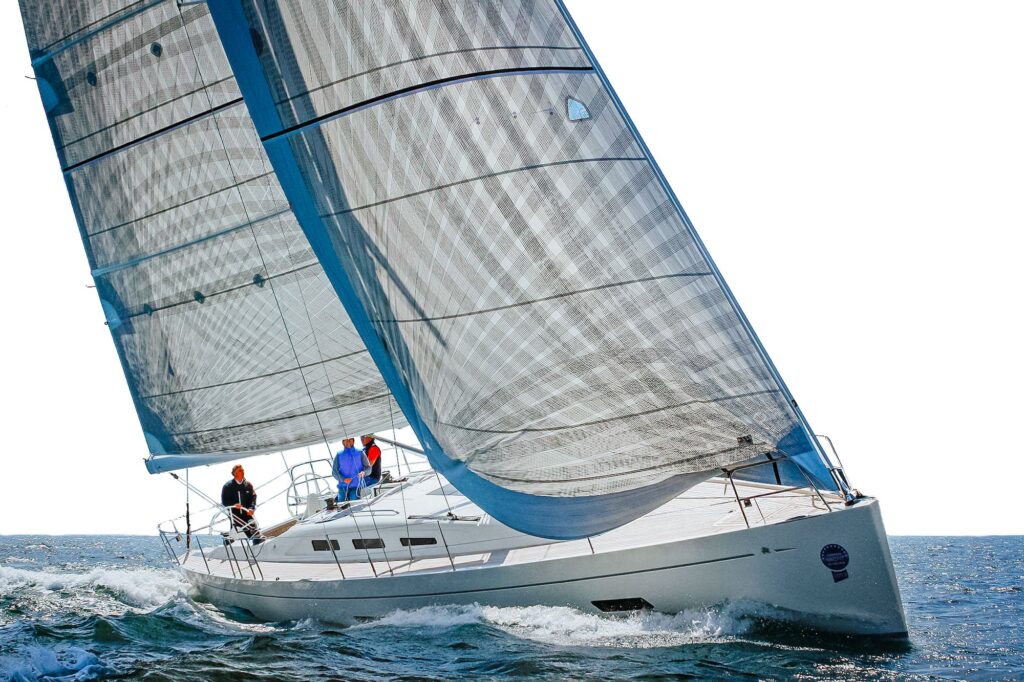
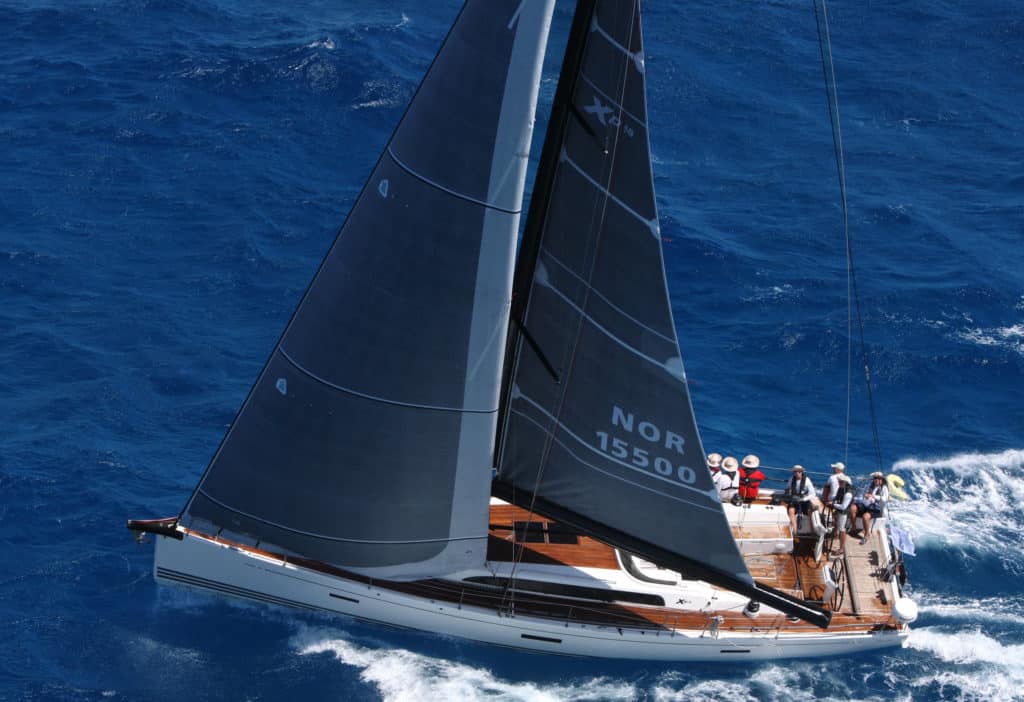
Set, reef, and stow your mainsail without leaving the cockpit. Whether you need a dependable Dacron replacement, a laminate upgrade, or a performance cruising X-Drive sail, UK Sailmakers builds furling mainsails for boats of all sizes — custom fit to your mast or boom system for flawless furling, every time.
Why furling?
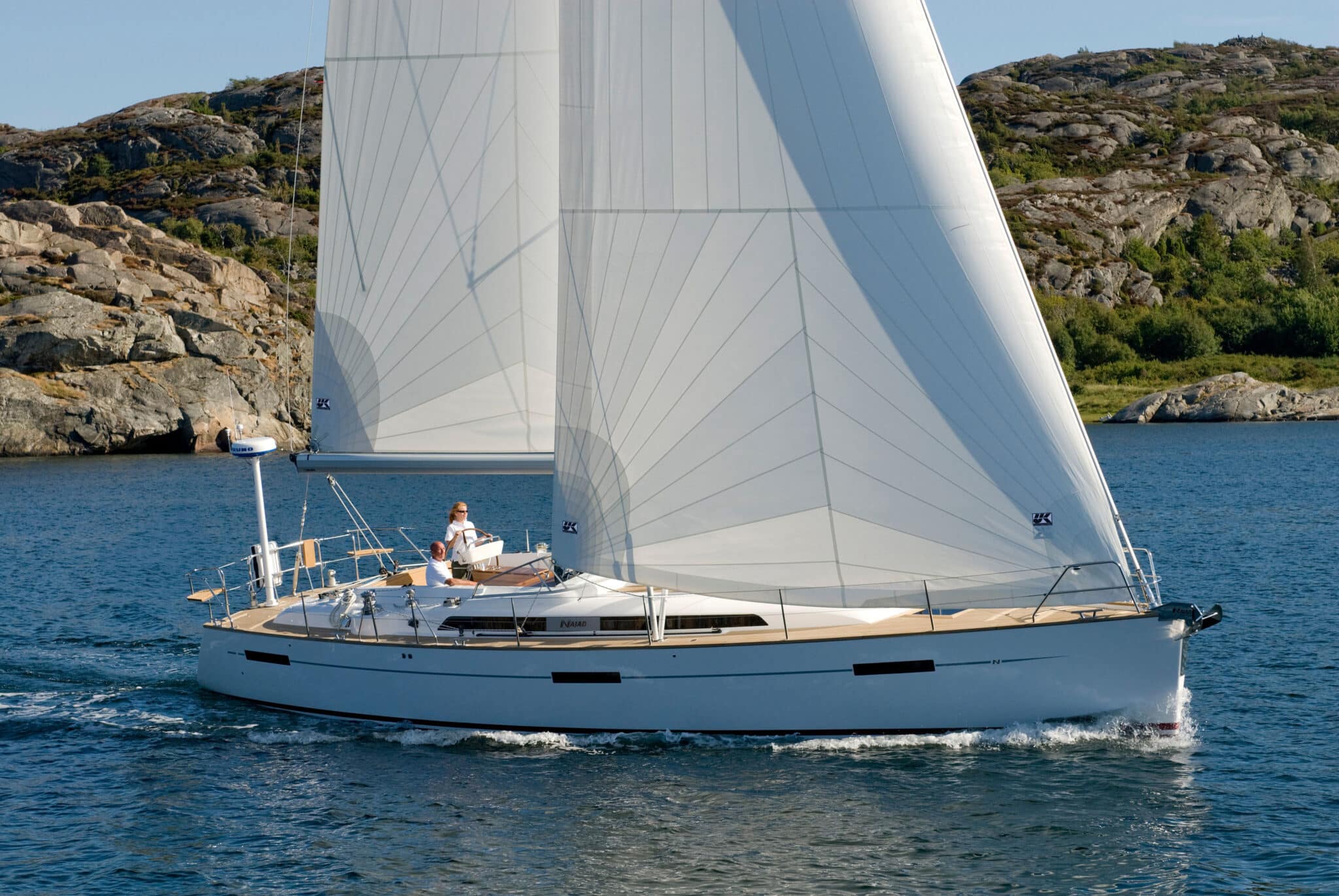
There’s a reason nearly every new 40ft+ cruising yacht now offers a furling mainsail. For shorthanded crews, couples sailing together, and anyone heading offshore, the advantages are transformative.
Never Leave The Cockpit
No trips to the mast
Set, reef, and stow your mainsail without going forward on a pitching deck in foul weather or darkness. Everything happens from where you’re already standing.
Infinite Reefing Points
Match the wind exactly
Unlike slab reefing with its fixed two or three positions, furling gives you continuously variable sail area — trim to the breeze you actually have, not the closest reef.
True Shorthanded Sailing
Sail a 50-footer with two
Handle a 45, 50, or even 55 footer with just two people — without the coordination and deck work that slab reefing demands of a full crew.
Reef On Almost Any Point Of Sail
No rounding up required
Batten-less in-mast systems let you reduce sail without turning head to wind — even running downwind, when rounding up is the last thing you want to do.
UV Protection Built In
Stowed out of the sun
Furled sail area is stored inside the mast or boom, protected from UV degradation and chafe instead of sitting on the boom under a cover.
End Of Day Simplicity
Away in seconds
Roll the mainsail away as you come in — no flaking, no lazy jacks to fight, and no sail cover to rig before you can go ashore.
In-Mast Furling: Choosing Your Batten Configuration
Not all in-mast furling mains are built the same way. The batten configuration you choose has a direct effect on sail area, shape, and how the sail furls. UK Sailmakers builds all three options in Dacron, laminate, and X-Drive construction, custom designed to your specific mast profile.
Battenless
The simplest configuration
A batten-less main furls smoothly on virtually any point of sail, including well off the wind, which makes it a favorite for offshore passage making. The trade off is a concave leech, which typically costs 20 percent or more of sail area compared to a full roach main.
Partial (Short) Vertical Battens
The practical middle ground
Short battens are added in the upper panels, where roach loss is greatest and a little extra support makes the most difference to shape. This recovers some sail area and improves the leech profile without asking much more of the crew or the furling system — a shape upgrade without changing how you sail.
Full Vertical Battens
The most area and best shape
Battens run the full length of the leech, parallel to the mast, so they roll into the furler as the sail is furled. This supports genuine positive roach and delivers the best shape and area of any in-mast option — up to 20 percent more than a batten-less sail. Full battens generally need to be set and furled roughly head to wind.
| Battenless | Partial Battens | Full Battens | |
|---|---|---|---|
| Sail area / roach | Least. Concave leech. | Moderate gain in upper panels. | Most. Positive roach, full hoist. |
| Furling ease | Simplest, most forgiving. | Straightforward, minor added care. | Requires good technique and tension control. |
| Point of sail to furl | Any point of sail. | Any point of sail. | Roughly head to wind. |
| Best for | Budget conscious blue water cruisers. | Cruisers wanting a shape upgrade without a big change in habits. | Coastal and Med sailors who want the most area and best shape. |
Fabric Options For Your Furling Mainsail
The batten configuration determines your sail’s shape potential. The fabric determines whether that shape survives contact with real world sailing. UK Sailmakers offers a full range of cloth options so you can match your sail to your sailing and your budget.
Dacron
Proven, economical, and dependable. Cross cut woven polyester construction with properly sized corner and reef patches, premium hardware, and UV covers. The most economical option and a dependable choice for cruisers who prioritize value.
Laminate
A step up in weight savings and shape retention over Dacron, without the cost of a full X-Drive build. Laminate mainsails hold their designed shape longer than woven cloth, which means smoother, more consistent furling over the life of the sail. A good fit for cruisers who want better performance than Dacron but don’t need the maximum stretch resistance of X-Drive.
X-Drive
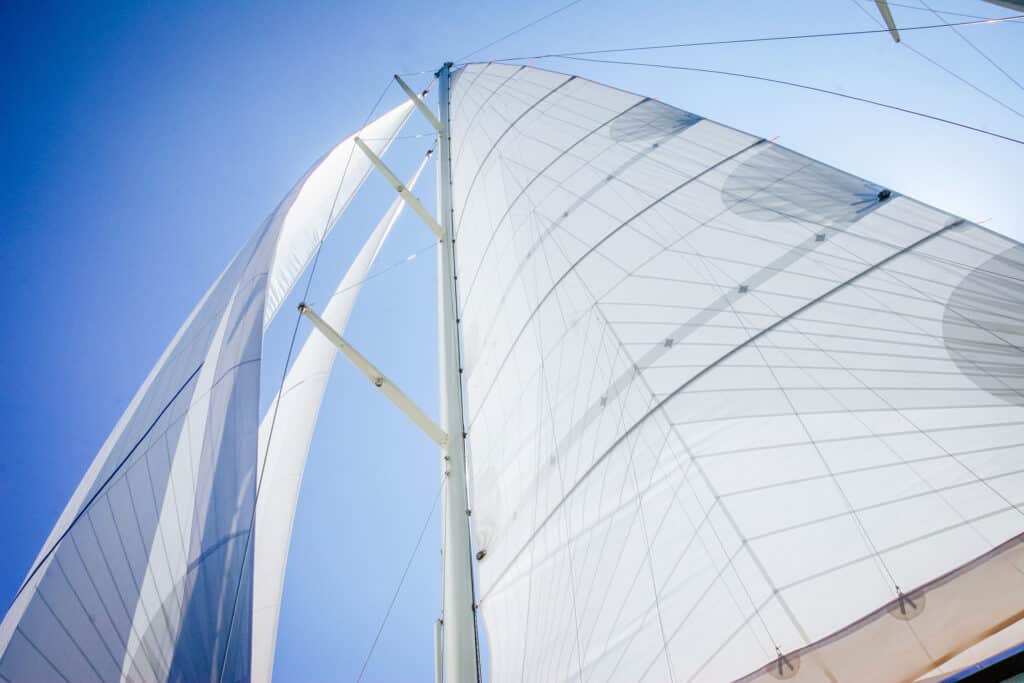
Our most popular option for performance cruising. X-Drive sails are reinforced with continuous, high strength, low stretch fibers running corner to corner across the entire sail, so the fibers carry the load instead of the seams or base cloth. Compared to Dacron, X-Drive is smoother, lighter, and thinner — which translates directly into easier, more reliable furling with less bulk and less chance of a jam. Choose from Carbon for maximum stretch resistance, Endure (Endumax) for near carbon performance with a classic white appearance, or Silver (S-Glass) as a budget friendly step up from Dacron.
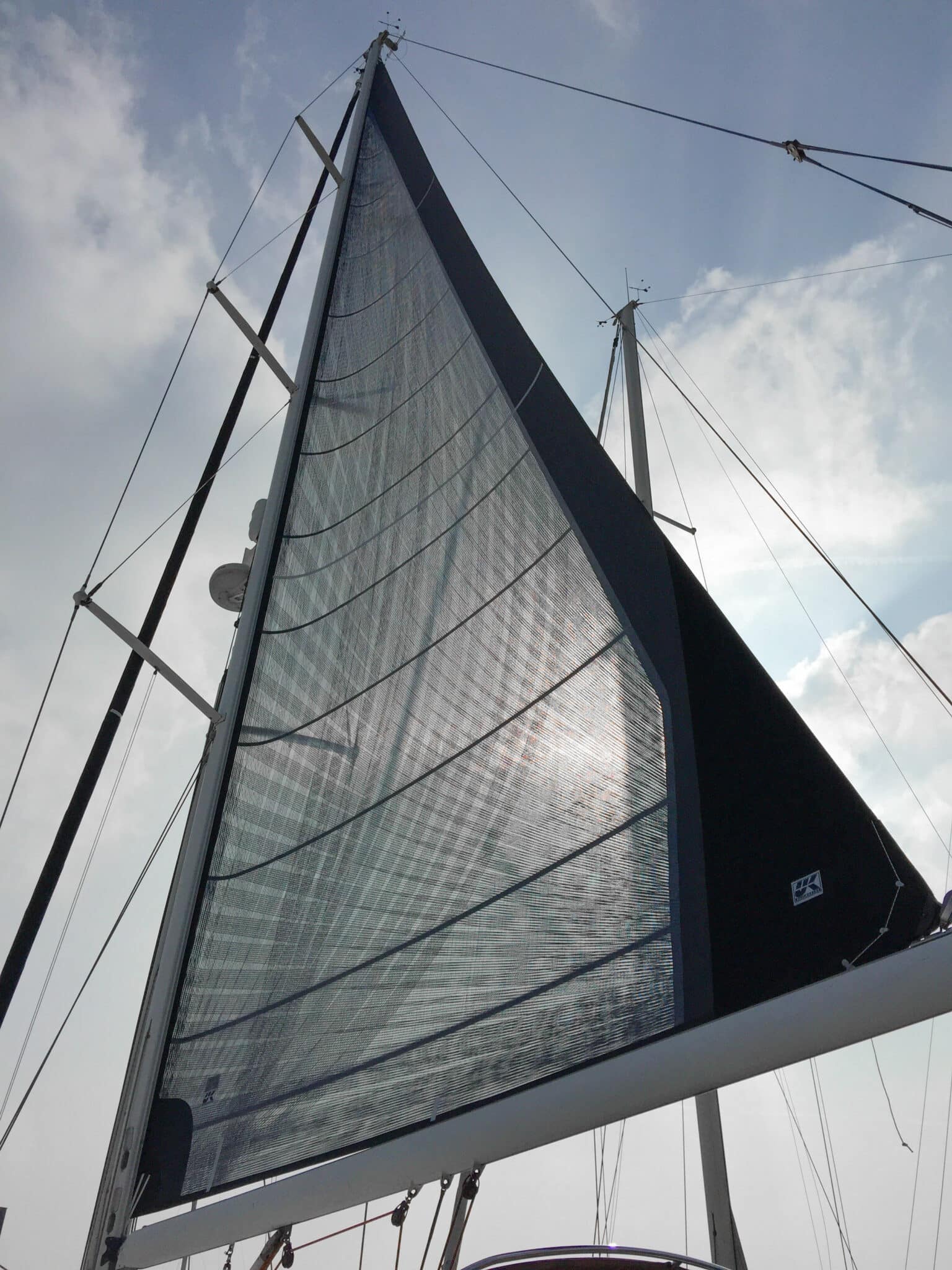
X-Drive’s continuous corner-to-corner fibers keep a furling main flat and even — the shape that keeps furling smooth season after season.
In-Boom Furling: A Maximum Performance Alternative
For sailors who want furling convenience without giving up full battens, UK Sailmakers also builds mainsails for in-boom furling systems.
- Full length horizontal battens for the best sail shape of any furling system
- Up to 97.5 percent of standard (non-furling) sail area
- A built in safety advantage: if the system jams, you can still drop the sail
- Can be retrofitted to an existing standard mast
- Available in X-Drive or Dacron construction
If your boat already has a furling mast, an X-Drive in-mast main with full or partial battens is typically the best upgrade path. If you’re willing to invest in a furling boom, in-boom gives you the closest thing to the best of both worlds: full battens and one person operation.
FAQs
How much performance do I really lose with in-mast furling?
It depends on your batten configuration. A batten-less sail gives up the most area — roughly 20 to 27 percent compared to a full roach main. Partial battens recover some of that in the upper panels, and full battens recover the most, up to 20 percent back. Most cruisers find that because furling is so easy, they carry the correct amount of sail more often, which frequently makes up the difference against a slab-reefed boat that delayed reefing because of the hassle.
What about jamming? I’ve heard horror stories about in-mast furling.
Most jamming problems trace back to a stretched, baggy sail that creates uneven bulk inside the mast, poor technique such as not maintaining outhaul tension while furling, or deferred maintenance. Charter fleets running 45 to 50 foot boats with in-mast furling, operated daily by inexperienced crews, rarely have problems when the sails are in good condition. X-Drive and laminate cloth hold a flat, even profile far longer than standard Dacron, which keeps furling smooth.
Should I choose battenless, partial, or full battens?
It depends on how you sail. Battenless is the simplest and can be furled on any point of sail — a real advantage offshore where you may need to reef running downwind. Partial battens are a good middle ground, adding shape with little change to how you handle the boat. Full battens give the most area and the best shape but need the boat pointed roughly into the wind to set and furl. Many cruisers on 40 to 50 foot boats choose full or partial battens and find the improvement well worth the small operational difference.
Why X-Drive or laminate instead of Dacron for a furling mainsail?
Dacron stretches over time, and in a furling application stretch creates a baggy sail that furls unevenly and jams more easily. X-Drive and laminate cloth hold their designed shape far longer, rolling more easily with less friction. That said, UK Sailmakers builds quality Dacron furling mains for budget conscious sailors too, using proper construction and premium hardware.
What’s the difference between in-mast and in-boom furling?
In-mast furling rolls the sail inside the mast around a rotating foil. In-boom furling rolls it inside a specially designed boom, which allows full length battens and nearly full sail area, giving better shape and performance. In-boom also lets you drop the sail if the system jams. The trade off is cost and a heavier boom.
Can I replace my old furling mainsail without changing my mast?
Absolutely — this is one of our most common projects. UK Sailmakers designs a new sail specifically for your mast’s extrusion profile, so you can upgrade from a tired Dacron sail to laminate or X-Drive, with or without battens, and see an immediate difference in shape and furling reliability. No mast modification required.
Request your free, no-obligation quote, or find your nearest loft to talk directly with a sailmaker. With 50+ lofts worldwide, expert advice is always close at hand.