What’s lurking inside your furled sails? If you’ve ever pulled out your headsail for the first spring sail only to find it mottled with unsightly grey or black patches, you already know the answer. Mildew is one of the most common concerns among sailors. While it is primarily a cosmetic issue rather than a structural one, left untreated, it becomes increasingly difficult to manage, and in some cases, impossible to fully remove.
The good news? With a foundational understanding of why it grows and a few straightforward habits, you can significantly reduce the risk of mildew taking hold.
Why Mildew Grows on Sails
Mildew is a fungus. Like all fungi, it requires three things to thrive: moisture, warmth, and a food source. Sails stored damp on furlers or kept in poorly ventilated lockers for extended periods are prime targets. Salt residue compounds the problem; because salt is hygroscopic, it actively attracts and retains moisture from the air, even in seemingly dry conditions.
Eliminating mildew entirely is a complex challenge. At UK Sailmakers, we focus on prevention methods that balance effectiveness with environmental and human safety. While many modern sailcloths are manufactured with antimicrobial inhibitors, these treatments eventually diminish and are not a substitute for proper maintenance.
Not All Materials Are Equal
The type of sailcloth makes a real difference. Woven materials such as Dacron are breathable, allowing moisture to pass through rather than becoming trapped, which makes them inherently less hospitable to mildew. Laminate sails, including X-Drive® sails, by contrast, are impermeable; moisture cannot escape through the Mylar film, and so it lingers on and between surfaces.
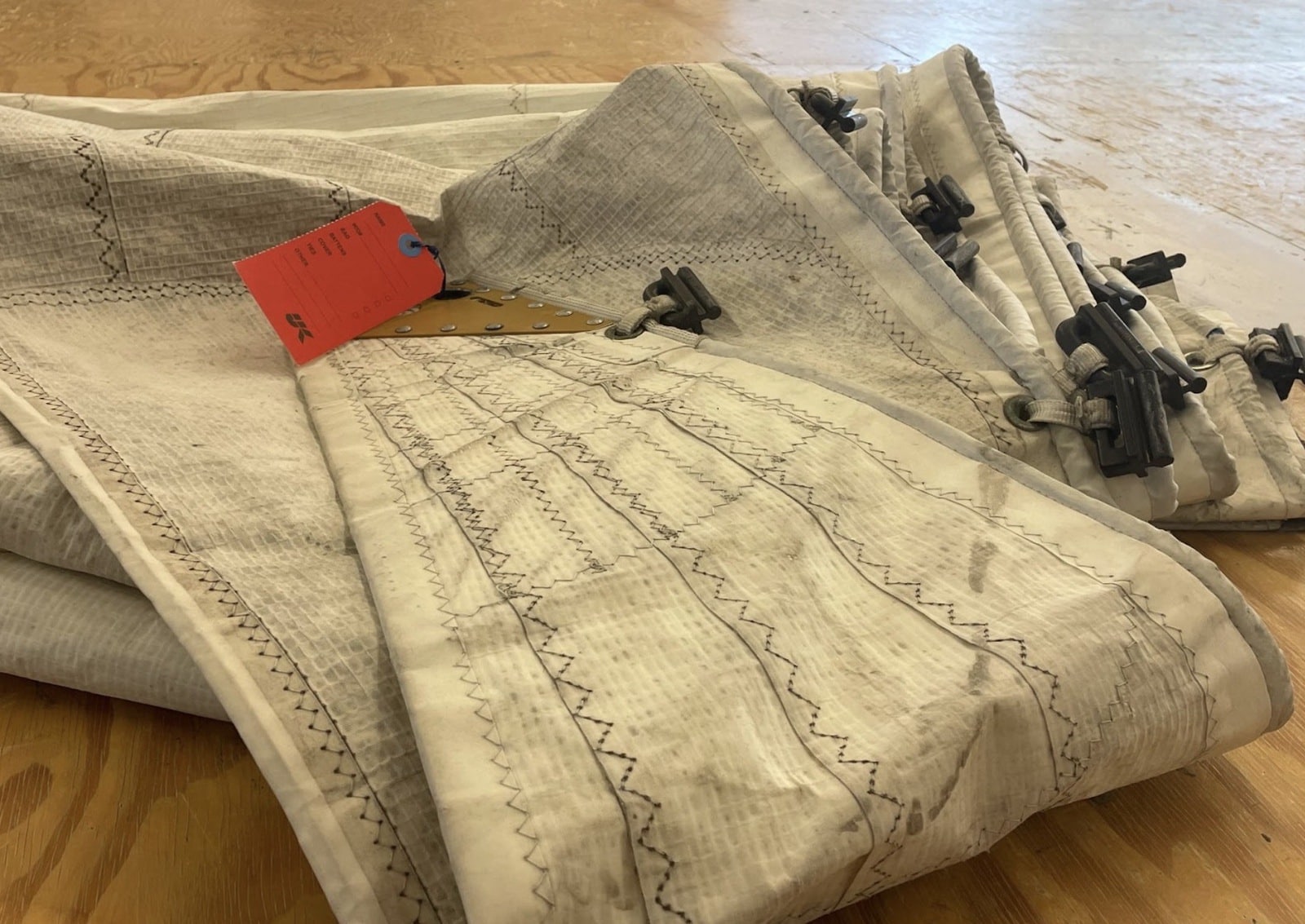
Laminate sails are also particularly vulnerable at the stitch holes, where the laminate has been penetrated during construction and the internal layers are exposed to the elements. These entry points can allow moisture to creep into the adhesive and structural layers, where mildew is especially tenacious and cleaning products struggle to reach.
“At our Miami loft, we see it every season: roller-furling sails left unchecked through humidity and inclement weather become a breeding ground for mildew. Whether it’s a genoa or a furling main, any sail left in the elements or furled while damp is at risk. Make it a habit to regularly dry your sails. Get out on the water a few times a month, or at least open your sails at the dock on a light-air day. A few hours of sun helps kill off spores—just be sure to keep an eye on the clock to avoid unnecessary UV exposure.”
— Mark Wood, UK Sailmakers Miami
Prevention: The Gold Standard
The single most effective tool in your arsenal is keeping your sails clean and dry.
- Dry Your Sails: If you have sailed in rain or heavy spray, or if sails have been furled through a period of wet, humid weather, make a point to air them out. A short sail on a dry day is ideal, but even unfurling them at the dock on a calm day will help. Ensuring the sails are dry before you leave the boat is your best defense against mildew growth.
- Rinse the Salt: Fresh water is your friend. Rinsing salt away prevents the moisture-trapping effect of salt crystals and reduces their abrasive wear.
- Off-Season Storage: For boats inactive for more than a few weeks, we recommend removing the sails to dry storage. A climate-controlled environment is far superior to ‘stowing and forgetting’ sails in a humid bilge or a sealed lazarette.
- Ventilation: If sails must stay in bags down below, ensure the bags feature mesh panels or are made of breathable material. Sails stored onboard will fare much better in a well-ventilated cabin, ideally with a dehumidifier running to pull moisture from the air.


Airing out your sails is a critical step in preventing mildew growth. Ensure any sails stored onboard are kept in a dry, well-ventilated area and in breathable bags.
What to Avoid
We strongly advise against three common DIY remedies:
- Pressure Washing: High-pressure water can blast apart the long-chain polymers in the sailcloth and shred the structural stitching. The damage may not be visible immediately, but it drastically shortens the sail’s lifespan.
- Chlorine Bleach: Bleach is a harsh oxidant. While it kills surface spores, it can also degrade polyester (Dacron) fibers and rapidly break down the adhesives used in laminate sails. Chlorine exposure can also have a yellowing effect on sails.
- Laundry Detergents: Avoid liquid laundry detergents containing biodegradable organic components. If not rinsed perfectly, the residue acts as a buffet for the next generation of mildew spores.
When Mildew Has Taken Hold
Acting quickly is vital. Surface mildew treated early, before it penetrates the fiber or the laminate sandwich, is manageable. However, once mildew has bloomed, it is likely to recur unless the storage conditions change.
A professional deep clean can often reduce dark black staining to a faint grey, but total restoration is never guaranteed. Always check with your local UK Sailmakers loft before attempting a DIY cleaning; they can recommend the safest, most effective products available in your area for your particular sail.


Many UK Sailmakers lofts offer professional sail cleaning services. (Right) Bert the Sheltie is standing by at UK Sailmakers Ireland with a basket of sails heading off to TipTop Sail Laundry.
Professional Services and Specialist Coatings
Many UK Sailmakers lofts offer professional cleaning services, either in-loft or through trusted industry partners. These experts use specialized sail-safe cleaning products that lift dirt and grime without stripping the cloth’s integrity. Winter service is the ideal time to schedule this.
Additionally, select lofts offer sail coating treatments designed to help inhibit mildew growth such as SailKote or Seal’n’Glide. These coatings create a protective barrier on the sail’s surface, making it much harder for spores to find a foothold. It is important to note that these are strictly preventative measures intended for new sails; they cannot treat existing mildew or prevent its return once a bloom has occurred. While these coatings can also be applied to professionally cleaned sails, their efficacy is reduced compared to an application on new cloth and is generally not recommended. Availability and specific products vary by location, so contact your nearest loft to see what they offer.
For advice on sail care, cleaning, or storage, contact your nearest UK Sailmakers loft. Our team is dedicated to helping you protect your investment and get more seasons from your sails.