
Results
CONTRAST COUNTS: MAKE YOUR SAIL NUMBERS SEEN
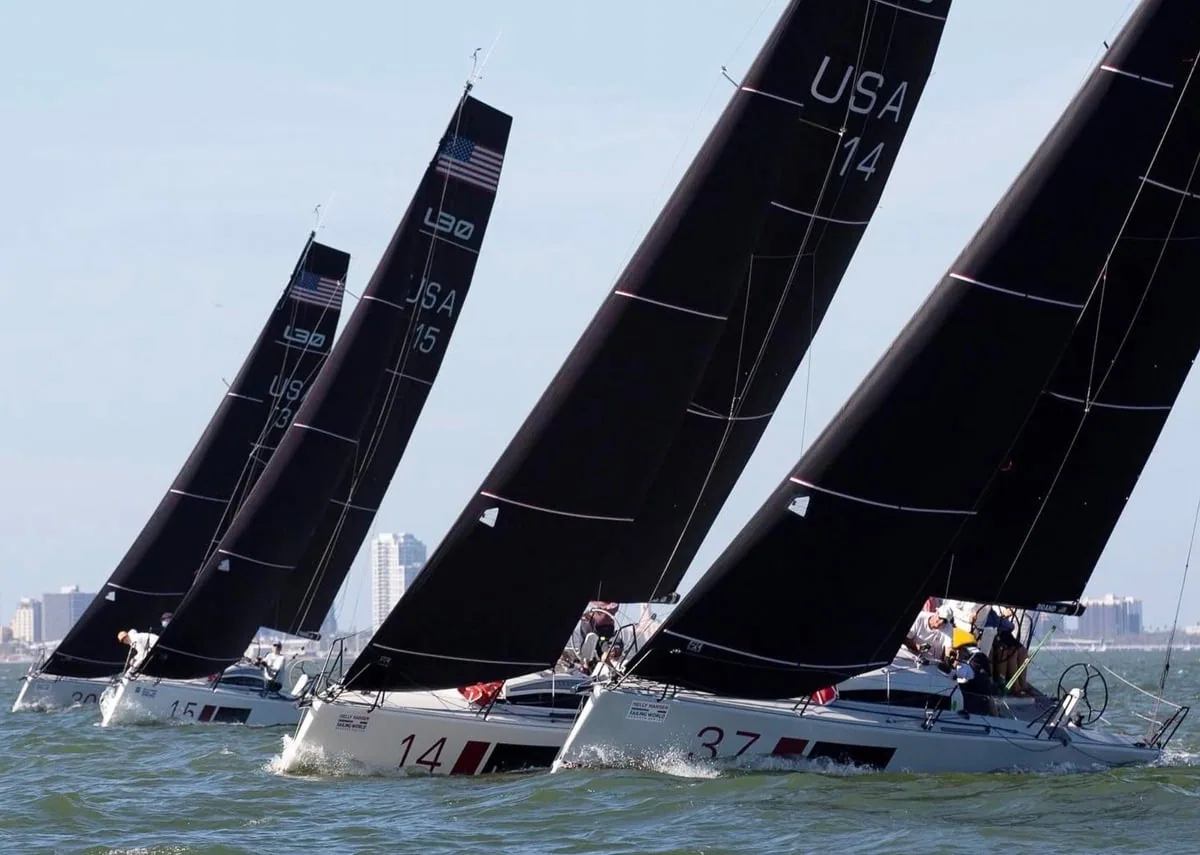
2025 L30 North American Championship. Photo © L30 International Class Association & Anastasia Kolesnichenko.
Perhaps one of the more overlooked sections of the Racing Rules of Sailing is Appendix G1.2, which addresses the display of sail numbers.
With the increasing use of black sails on racecourses, race officers are finding it more challenging to identify boats' sail numbers during pre-race check-ins, starts, and finishes—especially when the numbers are dark on dark sails.
Appendix G1.2 states:
"Sail numbers shall be… of a contrasting colour to the body of the sail… [and] shall be clearly legible when the sail is set."
While grey or black sail numbers on black sails may look sleek, they are not permitted under the Racing Rules of Sailing. Many race committees are addressing this issue by issuing warnings to skippers. Some are beginning to impose discretionary penalties and adjusting scores.
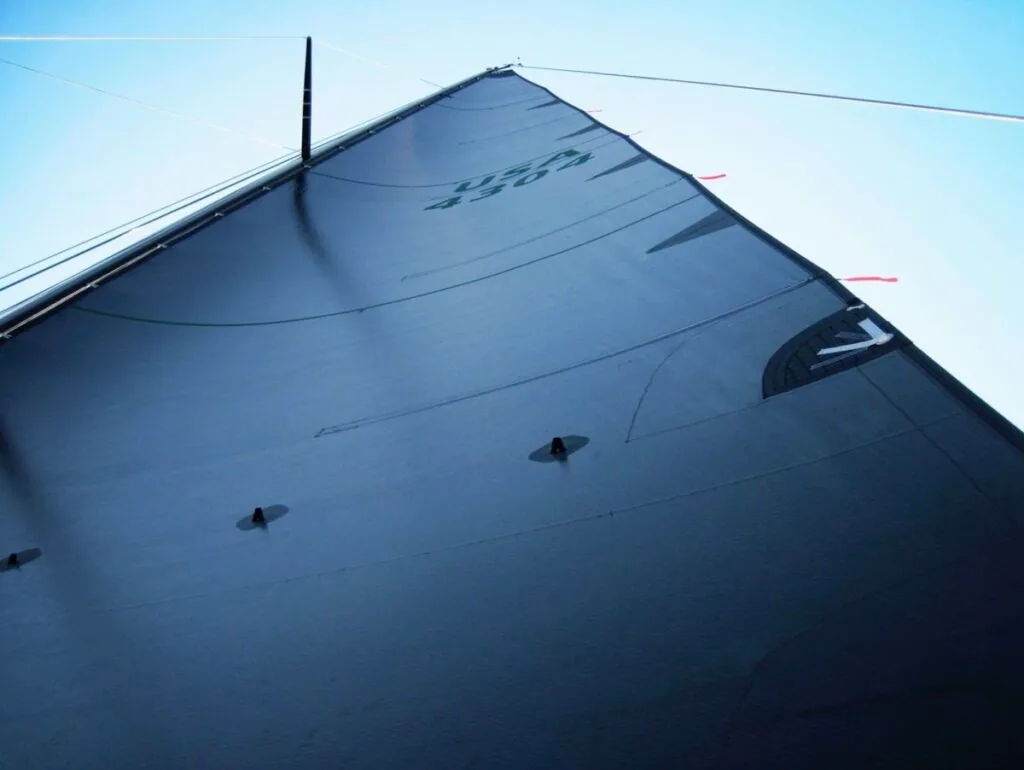
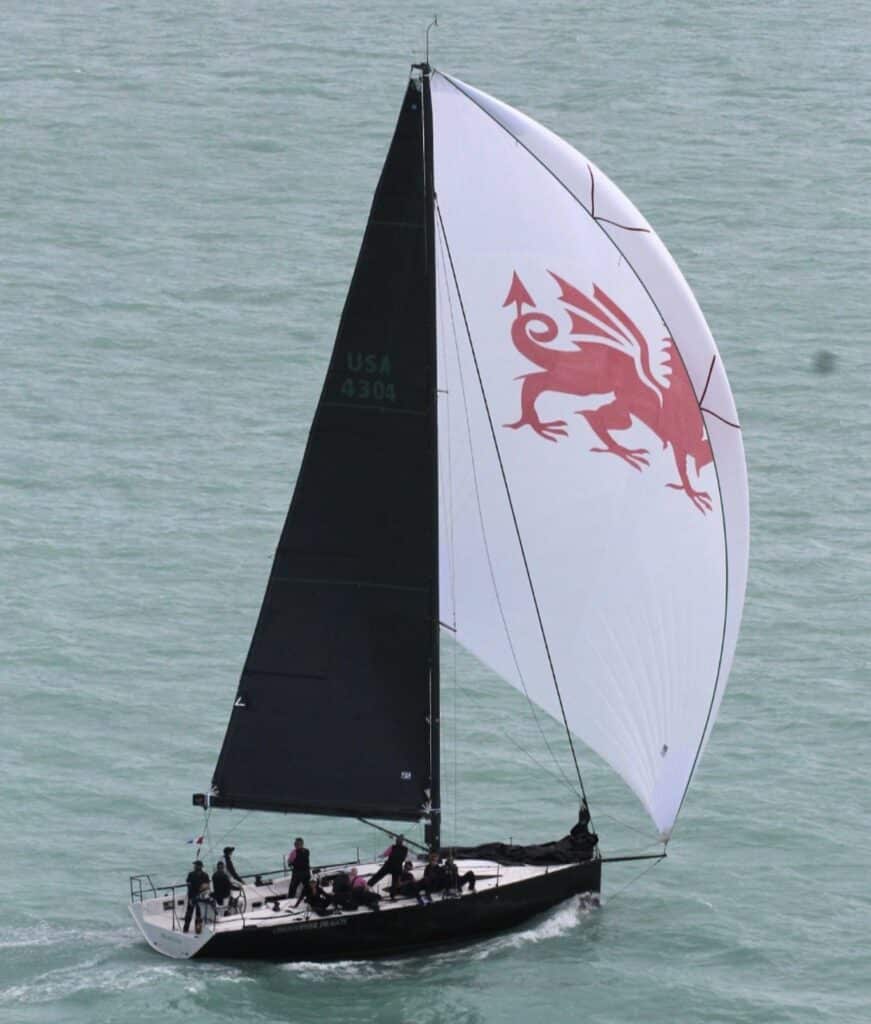
Low contrast sail numbers such as a standard green colour on a black base material are difficult to read, especially in low-light conditions.
What many racers may not realize is that boats are identified in scoring programs and from Signal boats primarily by their sail numbers, not just their names. Check-in and finish sheets, used by race officers, list boats by their sail numbers, which are far easier to spot on the racecourse than boat names.
On the water, race committees cannot see boat names easily since they are displayed on hulls, either on the sides or transoms, where they sit low in the water. Sail numbers, however, are unique to each boat and positioned much higher above the water, making them significantly easier to read from Signal boats at the starting and finishing lines.
Put yourself in a race volunteer’s shoes. You are an experienced race officer, but you’re not familiar enough with each boat to identify them quickly by hull shape, color, or brand. As boats approach either the starting line or the finishing line in a cluster and if they don’t have bow numbers, it’s the sail numbers that the line caller will pre-announce before the gun or finish that the scorers will record “just in case.” When boats are overlapped, simply spotting sail numbers requires a keen eye.
Now, imagine recording sail numbers and times at the finishing line. A group of boats is approaching under overcast skies or near sunset. Some sail numbers are clearly visible, while others in dark colors on dark sails are impossible to read. Even reviewing zoomed-in images after the race, you still cannot identify every boat that crossed the finishing line. As a result, some boats without contrasting sail numbers are scored DNF, delaying the posting of race results.
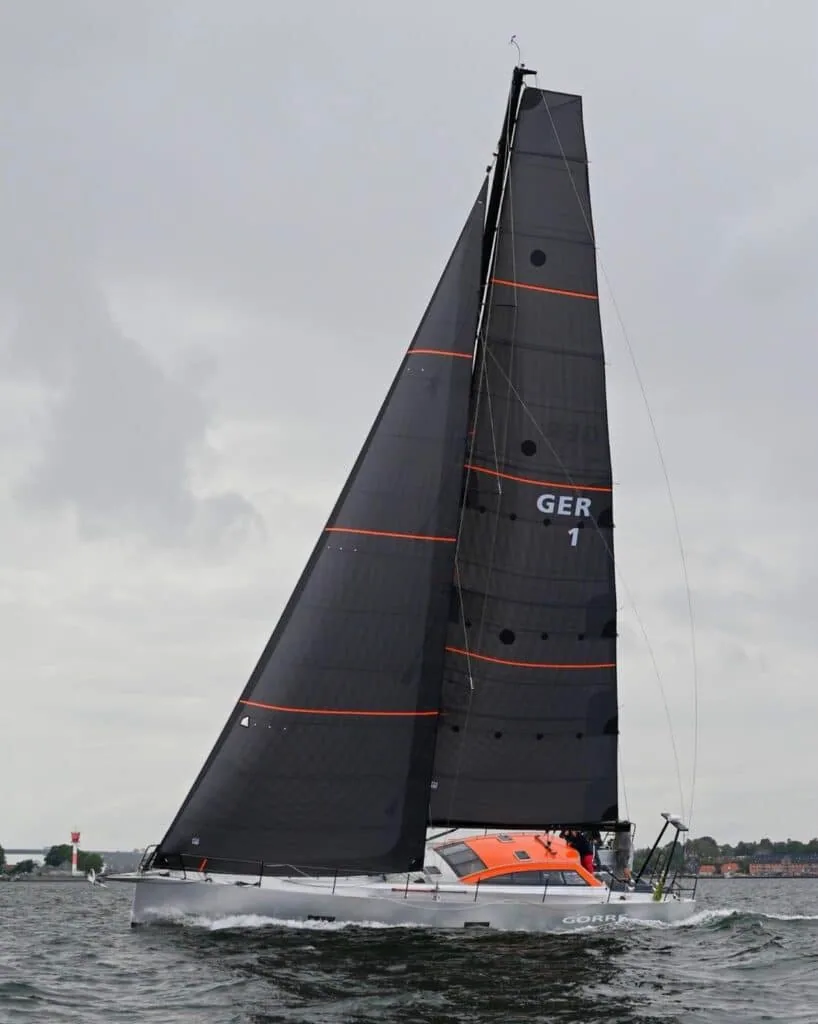
Neon or white sail numbers are much easier to read against a black or dark grey sail. Photo © Irk Boockhoff.
If your boat has non-contrasting sail numbers and is scored DNF, how do you request redress to have your finishing time properly recorded? If your sail numbers clearly violate RRS Appendix G1.2, the protest committee may not be willing to reinstate your finish time.
Even standard blue, red, and green numbers are difficult to read on black sails. A growing trend is using bright sail numbers, like bright orange, yellow, green or pink on black sails. Plain white sail numbers will not only make race officers happy but also ensure your boat is properly scored.
If your local race committee has asked you to change your sail numbers to a more contrasting color, this is an easy fix that any UK Sailmakers loft can handle for you. Your race officers will appreciate it.