
SAIL TECHNOLOGY
ISL: the Integrated Structural Luff.
A modern answer to headstay sag — a structural luff built into the sail so your headsail keeps the entry it was designed with, and you keep pointing.
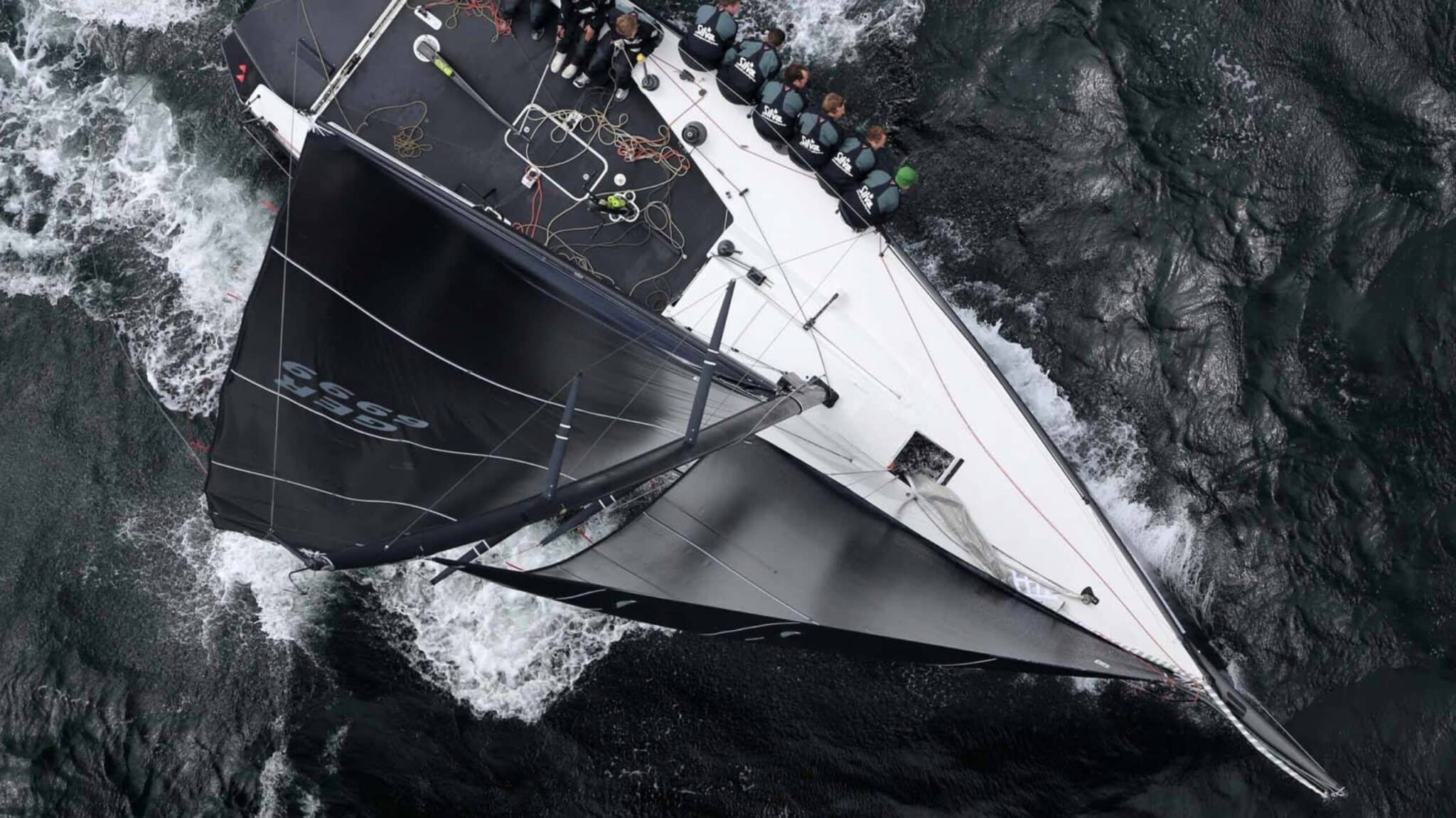
Photo © UK Sailmakers
Headstay sag
the reason a headsail gets fuller and rounder in the entry exactly when you want it flat
Built-in luff
the sail carries its own structural luff, so the shape holds instead of following the wire
Point higher
a straighter entry means a narrower groove you can actually use upwind
WHY IT MATTERS
Your headstay moves. Your sail shouldn’t follow it.
Every headsail is designed around an assumed amount of headstay sag. Load the rig up and the wire bows to leeward; the luff follows it, the entry gets rounder, and the sail you paid for stops being the sail your designer drew. You lose pointing exactly when the fleet is pinching for the weather mark.
ISL — Integrated Structural Luff — builds the structure into the sail itself, so the leading edge holds its designed shape across a much wider range of loads. The result is a headsail that keeps a consistent entry from light air to a breeze, with less sensitivity to how hard you can crank the backstay.
UK Sailmakers’ lead designer Pat Considine walks through the whole story — what sag does to the entry, and how ISL answers it — in Lessons Learned Episode 21.
WHO IT SUITS
Racing headsails
Genoas and jibs where a repeatable entry is worth boat lengths upwind. Racing genoas →
Performance cruising
Furling headsails that stay well-mannered without a race-boat backstay. Cruising genoas →
Shorthanded crews
Less rig tuning to chase the same shape — helpful when there are two of you.
In depth
At UK Sailmakers, we are committed to pushing the boundaries of sail technology to give sailors every possible advantage on the racecourse. Our latest innovation, ISL (Integrated Structural Luff), has been a game-changer for furling cabled sails and now headsails are seeing the benefits. ISL construction is now available as an upgrade on new X-Drive® and Titanium headsails, enhancing upwind performance and adaptability across a range of conditions. ISL technology is also available for Code Zero sails.
What is ISL?
ISL is an advancement to UK Sailmakers’ Titanium and X-Drive sail technology that shares some of the headstay load onto the sail’s reinforced luff which overall, reduces headstay load. This results in a straighter headstay and better pointing ability. Reduced sag translates to increased speed and control even in challenging conditions. The blue and gold ISL logo is your mark of cutting-edge performance.
ISL can only be incorporated into new headsails, as it requires refining the initial sail design to perform with or without headstay load transfer. This is done by adjusting the fiber layout, increasing fiber passes along the luff to handle the added load. Carbon fiber—known for its exceptional strength and minimal stretch—is the gold standard for sails with ISL. It’s the default tape included with the ISL option, and we recommend it for optimal performance.
All X-Drive and Titanium sails are reinforced with narrow, high-strength, low-stretch fibers laminated to the sail along its primary load paths. By applying these continuous, load-bearing yarns from corner to corner, the yarns absorb the sail’s aerodynamic loads, not the seams or the base material. This means the sail holds its original designed shape longer than a traditional cross-cut Dacron or laminate sail and there is no seam creep, preventing catastrophic seam failure.
Get A Quote Today!
Contact your local loft to discuss your next ISL headsail from UK Sailmakers.
QuoteWhy Luff Load Sharing Matters
Headstay sag is a limiting factor in sail performance, particularly when sailing upwind. However, with advancements in structured luff technology, sailors can now transfer some of the headstay load onto the luff of the headsail itself, significantly reducing luff sag and enhancing pointing ability.
UK Sailmakers’ research and development team, spearheaded by Chicago-based lead designer, Pat Considine, developed ISL through Fluid-Structure Interaction (FSI) analysis and real-world sail testing. We studied how wind affected different headsail designs across variables such as headstay sag, sail controls, wind speed, and wind angles. Our findings revealed that shifting just 10% of the load from the forestay to the luff of a sail can result in a 30% reduction in forestay sag. This reduction directly translates to a straighter headstay, improved pointing ability, and enhanced upwind performance.
Originally tested on Code Zero sails, ISL technology allowed for the reduction of cable diameters, leading to weight savings and easier furling. Now adapted for upwind sails, ISL’s structured luff load distribution technology is proving effective for both high-performance boats and serious club racers or performance cruisers. ISL-enhanced sails are more adaptable to changing conditions, letting you “shift gears” as wind strength varies—without changing sails. This is especially valuable in IRC racing, where carrying extra sails can mean rating penalties.
For optimal performance, ISL sails should be set with luff tension at around 10% of the total headstay load. While it’s possible to apply more load, doing so won’t produce a proportional reduction in headstay sag. For example, increasing ISL load from 10% to 20% won’t double the sag reduction. That said, durability isn’t a concern. Most small and mid-sized boats lack the hydraulic systems needed to exceed safe tension levels, making it virtually impossible to overload the ISL luff under normal sailing conditions.
Image from a Fluid-Structure Interaction (FSI) study conducted by Pat Considine, showing an ISL-optimized headsail design for a Cape 31 in 16 knots of true wind speed (TWS).
MAT 1245, OBSESSION, was powered by UK Sailmakers Titanium upwind sails, including ISL headsails for their incredible 2025 racing season in Western Australia. Photo Ⓒ TP72 Nautical Imagery.
3 Smart Reasons to Upgrade Your Next Headsail
- Improved Upwind Performance: By shifting some of the headstay load onto the sail’s luff, ISL reduces sag, resulting in a straighter forestay and enhanced pointing ability.
- Versatility in Changing Conditions: ISL headsails perform exceptionally well across various wind ranges, adapting seamlessly for both light and heavy air.
- Performance Gains Without Extra Sails: With some new IRC rules penalizing boats for carrying additional sails, having a more adaptable headsail helps maximize efficiency within your inventory.
Beyond Headsails: Where Else Can ISL Make an Impact?
ISL technology has been rigorously tested and proven to enhance headsail performance, with its advantages extending to other sail types as well. For example, in Code Zero sails, it reduces the need for oversized anti-torsion cables, while in specialized downwind sails, such as staysails and jib topsails, it offers increased shape stability.
Talk to Your Local Loft
Whether you’re a seasoned racer looking for an edge or a performance cruiser seeking enhanced versatility, ISL technology could be the right upgrade for your next Titanium or X-Drive sail. Contact your nearest UK Sailmakers loft to learn how ISL can elevate your sailing experience.
Step up your racing performance and keep an eye out for the blue and gold ISL logo on the racecourse—it’s the mark of innovation, precision, and speed.
Would ISL help your headsail?
It depends on your rig, your rating rule, and how you sail. Ask the loft that would build it.