
Technique
HOW TO DO A MEXICAN SPINNAKER TAKEDOWN OR THE KIWI DROP
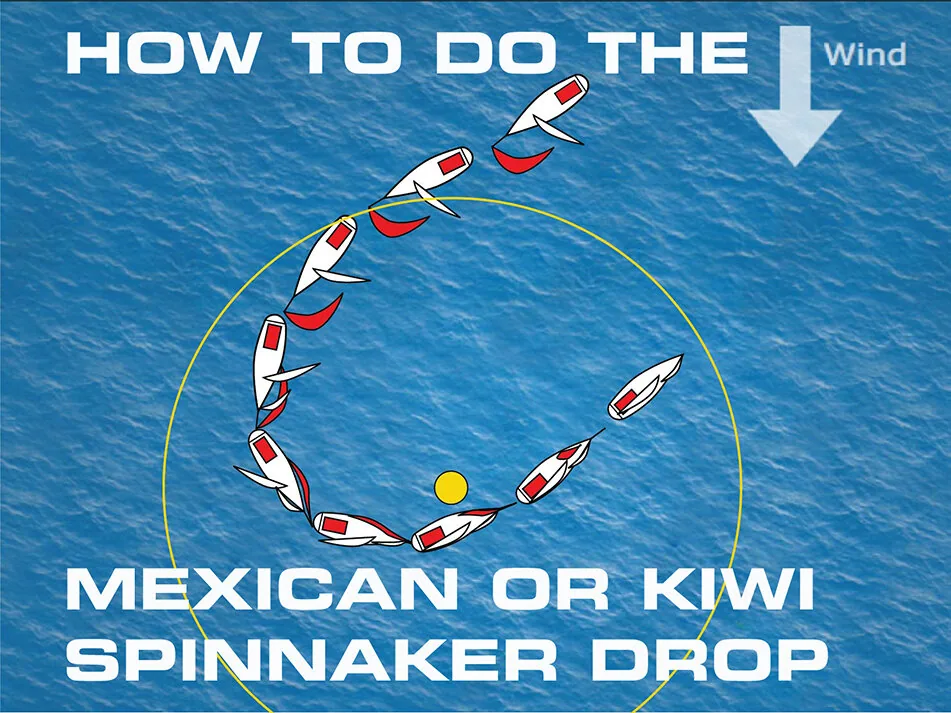
The Mexican (more on the name later) is a gybe drop.
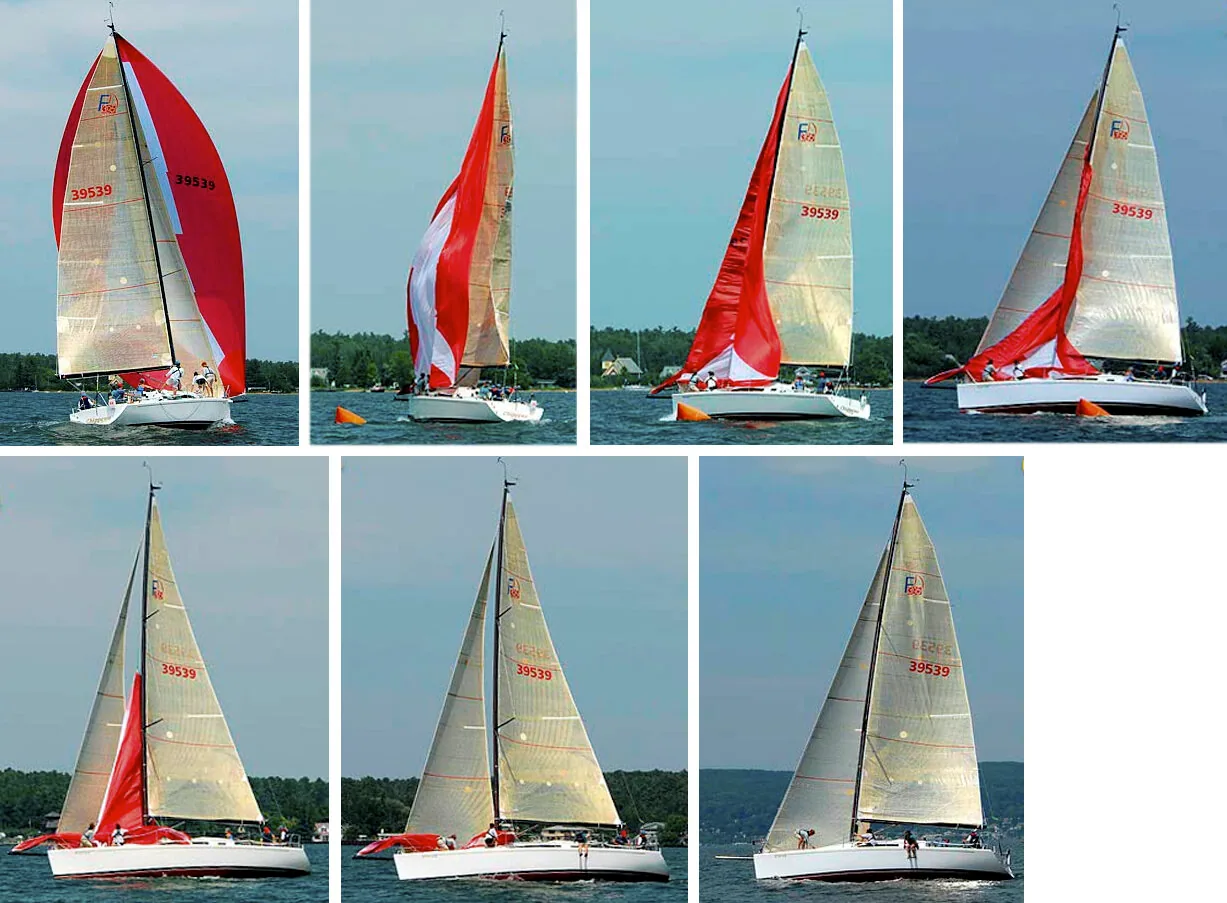
Photos Copyright: www.DallasJohnson.net
Going into the turn, the spinnaker is over trimmed pulling the foot right up to the deck. As the driver does the smooth left turn, this well-choreographed sailing ballet results in the spinnaker inverting and now laying on the new windward side of the jib. Here are the “steps:”
-
The bow team grabs the foot of the spinnaker as it collapses onto the windward side of the jib,
-
The pit person smokes the halyard,
-
As the sail slides down the jib onto the deck, the bow team gathers it in,
-
The pit person then blows the tack line, and
-
The sail gets stuffed down the forward hatch with at least three quarters of the sail on the deck before going upwind.
The beauty of the Mexican is that the helm and upwind trimmers can go about the business of building speed and establishing their lane without distraction. Frankly, all they want to hear is, “Clear to tack.”
If executed properly, you’ll have gone into the mark with max speed having the spinnaker drawing right until the end; and, as an inside right of way boat, you can do a smooth wide and tight tactical rounding within the zone forcing other boats away from the mark. Another advantage of the Mexican is that the spinnaker will be on the correct side of the boat for the next port set.
And, unless something in the Mexican goes left on you, your spinnaker will be dry and not twisted into a knot as it’s stuffed down the hatch.
Now, what’s with the name...the Mexican? The derivation of this name is purely geographical.
Buddy Melges concocted this maneuver on AMERICA3 during the ‘92 America's Cup trials in San Diego. With the prevailing winds of that area, virtually every time he came into a then-used port rounding, his bow was pointing toward Mexico.
In a future post we'll talk about how the maneuver came about in the Southern Hemisphere and how it became know as the Kiwi Drop.