
CRUISING GENOAS & JIBS
Titanium Double Taffeta
The lightest performance cruising headsail: molded carbon membrane over a Technora scrim, taffeta or Lite Skin both sides, full furling features.
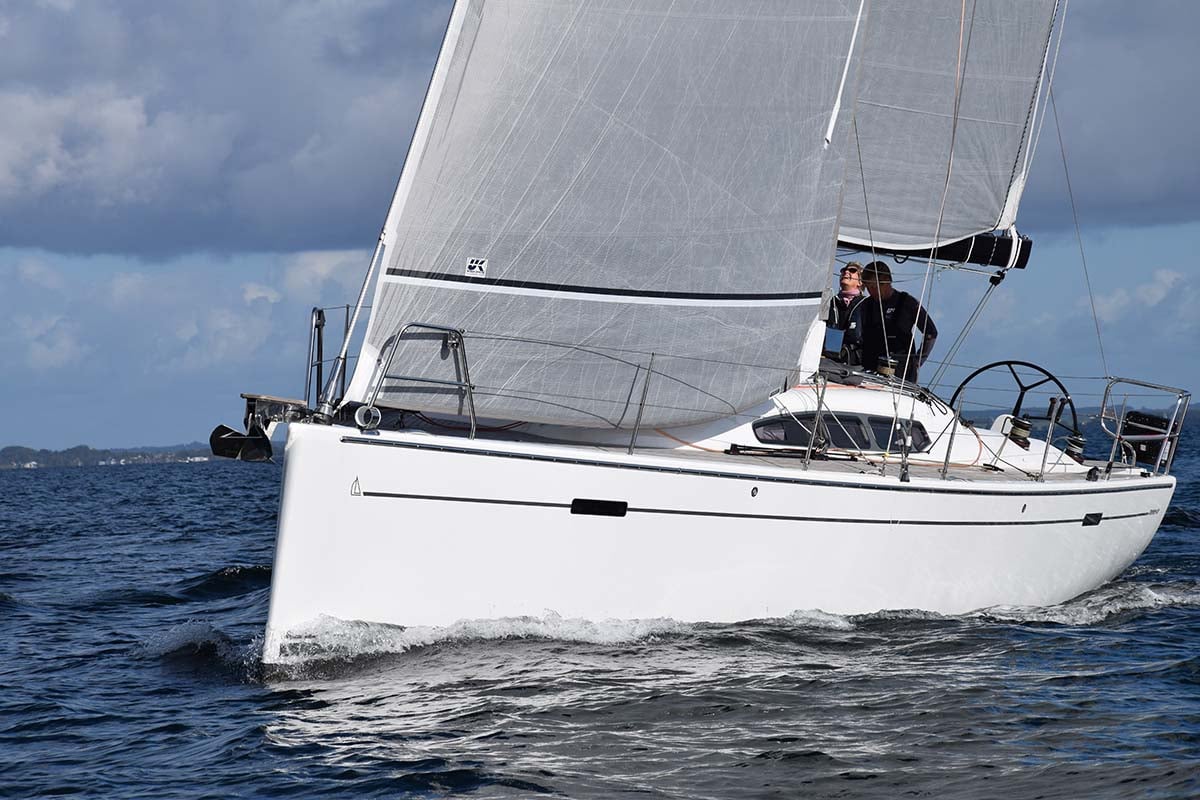
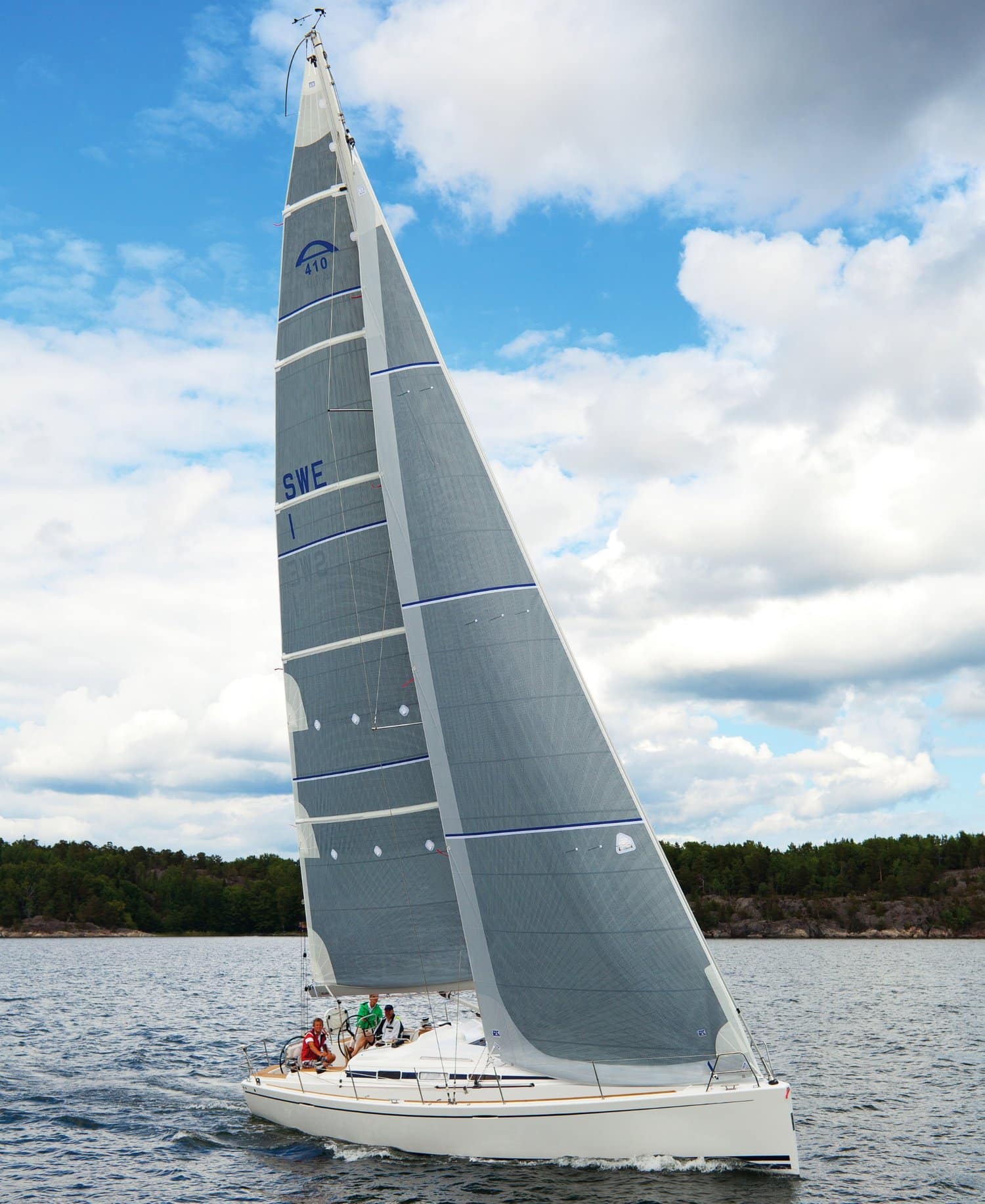
Photo © UK Sailmakers
Lightest weight
A molded membrane with continuous carbon load-path fibers — the least sail weight aloft for its strength, so the boat heels less and accelerates sooner.
Shape that lasts
Fibers run corner to corner along the actual load paths, so the designed shape survives season after season instead of stretching out of it.
Wrapped for durability
Lite Skin® or woven taffeta on the exterior takes the chafe, flogging, and UV — the membrane inside keeps doing the structural work.
HOW IT'S BUILT
A molded membrane, wrapped for real life.
Titanium sails are molded as one piece: carbon load-path fibers run continuously from corner to corner over a structural scrim, following the exact lines of load your rig puts into the sail. There are no panel seams across the primary loads to creep or let go.
The exterior finish does the everyday work. Lite Skin® or taffeta surfaces shield the membrane from chafe against spreaders and lazy jacks, from flogging during reefs and furls, and from UV — which is what makes a grand-prix construction genuinely practical for cruising and distance racing alike.
Because every Titanium sail is molded to order, your loft tunes the fiber layout, luff curve, and finish to your boat, your rig, and the conditions you actually sail in.
AT A GLANCE
Appearance Black, grey, white
Shape stability ★★★★★
Durability ★★★★☆
Price band $$$$$
ISL upgrade Ask your loft
HOW IT LOOKS, HOW IT WORKS
Titanium Double Taffeta in detail.
Photos & diagrams © UK Sailmakers
QUESTIONS SAILORS ASK
FAQs
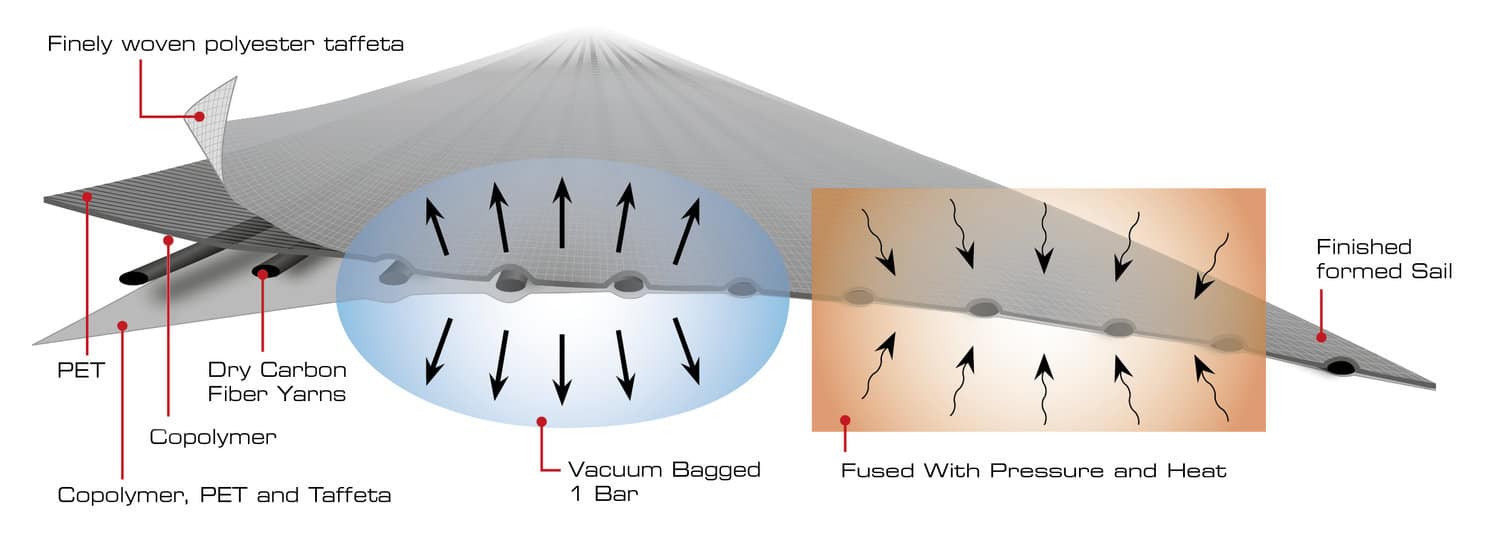
It’s a membrane sail built as a five-layer sandwich: a grid of continuous carbon load-path yarns laid dry between two layers of shaped film, with a finely woven polyester taffeta laminated to each outside face. The whole thing is heated and UV-bonded under vacuum into one smooth, wrinkle-free piece.
In most paneled sails the structural yarns run only the width of each panel, so the loads have to cross the seams. In a Titanium sail the carbon yarns run unbroken between the three corners, following the actual loads — which eliminates seam loads and the distortion, wrinkling, and seam failure that come with them. The sail holds its designed shape far longer.
Skipping the glue keeps the carbon yarns from going brittle and drops weight by 15–30%, for a lighter, more flexible, more durable sail — easier on the crew and longer-lived for the owner. The films are tacky on the inside from a copolymer coating, which holds everything in place until the final lamination.
The woven polyester taffeta on both faces doesn’t add strength; it protects the film from the abrasion and handling a cruising sail sees — against the spreaders, on the foredeck, and through the furler. That protection is exactly why it’s a great cruising choice. It’s available in white or grey.
Yes. It’s lighter and holds its shape better than heavy multi-ply Dacron or radial laminates, and the taffeta on both faces gives it the abrasion resistance cruising and furling demand. Built as a Passagemaker furling genoa it comes with a foam luff for better shape when reefed, reef reinforcements on the foot and leech, and sewn-on UV leech and foot covers to protect the sail while it lives on the headstay.
Other cruising genoas & jibs builds
Same sail, different construction — compare them all.