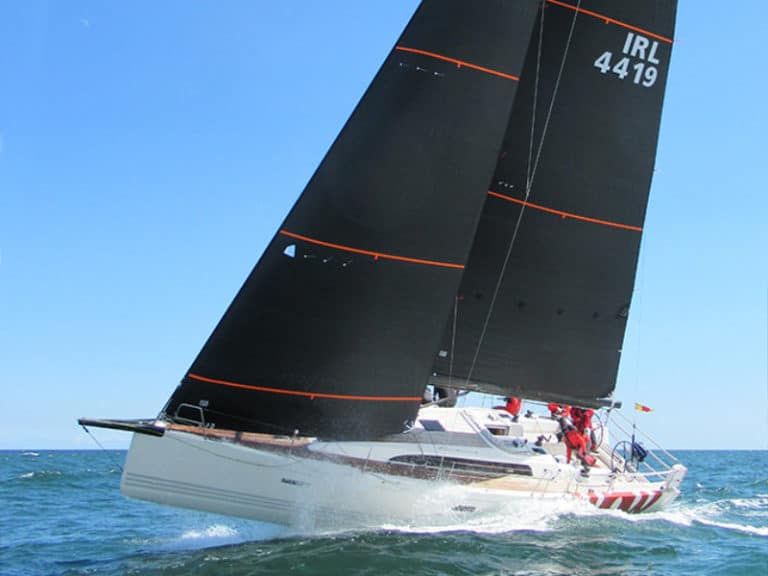
RACING HEADSAILS
Radial Racing Genoa
The original performance construction — warp-oriented gores radiating from the corners to follow the load paths, in woven polyester, polyester laminate, or carbon.

Why a Radial Genoa?
Radial sails were the only performance construction choice before Tape-Drive and other “string-sail” methods came along — and they’re still a strong option for racing sailors who don’t want a Tape-Drive or membrane sail. A tri-radial genoa uses a fully articulated panel layout that rotates the cloth’s thread line to match the primary load paths running between the three corners. The sail is built from long, narrow panels — called gores — that radiate from the corners so the cloth’s strong warp yarns line up with the loads, which arc from each corner across the sail to the others.
Load-Aligned Gores
Warp yarns follow the loads
Narrow radial panels fan out from the corners so the cloth’s strongest warp yarns line up with the loads that arc across the sail.
Right Cloth, Right Place
Mix fabrics by area
The many panels let us use stronger laminate at the leech and tack, lighter cloth at the luff, and tough chafe-resistant cloth in the foot — strength where it counts.
A Proven Alternative
Woven or laminate, your call
For racers who’d rather not move to a string or membrane sail, radial construction offers a familiar, dependable path — in polyester or carbon.
How a Radial Sail Is Built
The materials used in radial sails are “warp-oriented,” meaning the strongest fibers run the length of each gore. Laying those gores out so they radiate from the corners lines the warp yarns up with the loads that arc between the corners.
It’s worth being clear about the trade-off: unlike UK Sailmakers’ load-path constructions — Tape-Drive, X-Drive, and Titanium — the strong yarns in a tri-radial sail are cut at every seam, which makes them discontinuous and can lead to some distortion at the seams. Radial is the more traditional, often more economical, path; the load-path sails hold their shape longer.


Because a radial sail has so many panels, the sailmaker can use more than one laminated fabric in a single sail. Stronger laminates go in high-load areas like the leech and tack, lighter cloth goes in the less-loaded luff, and a heavy-duty, chafe-resistant fabric goes in the foot panels to stand up to tacking and chafe on the lifelines. By mixing cloth types this way, you get a lighter sail with more strength exactly where it’s needed.
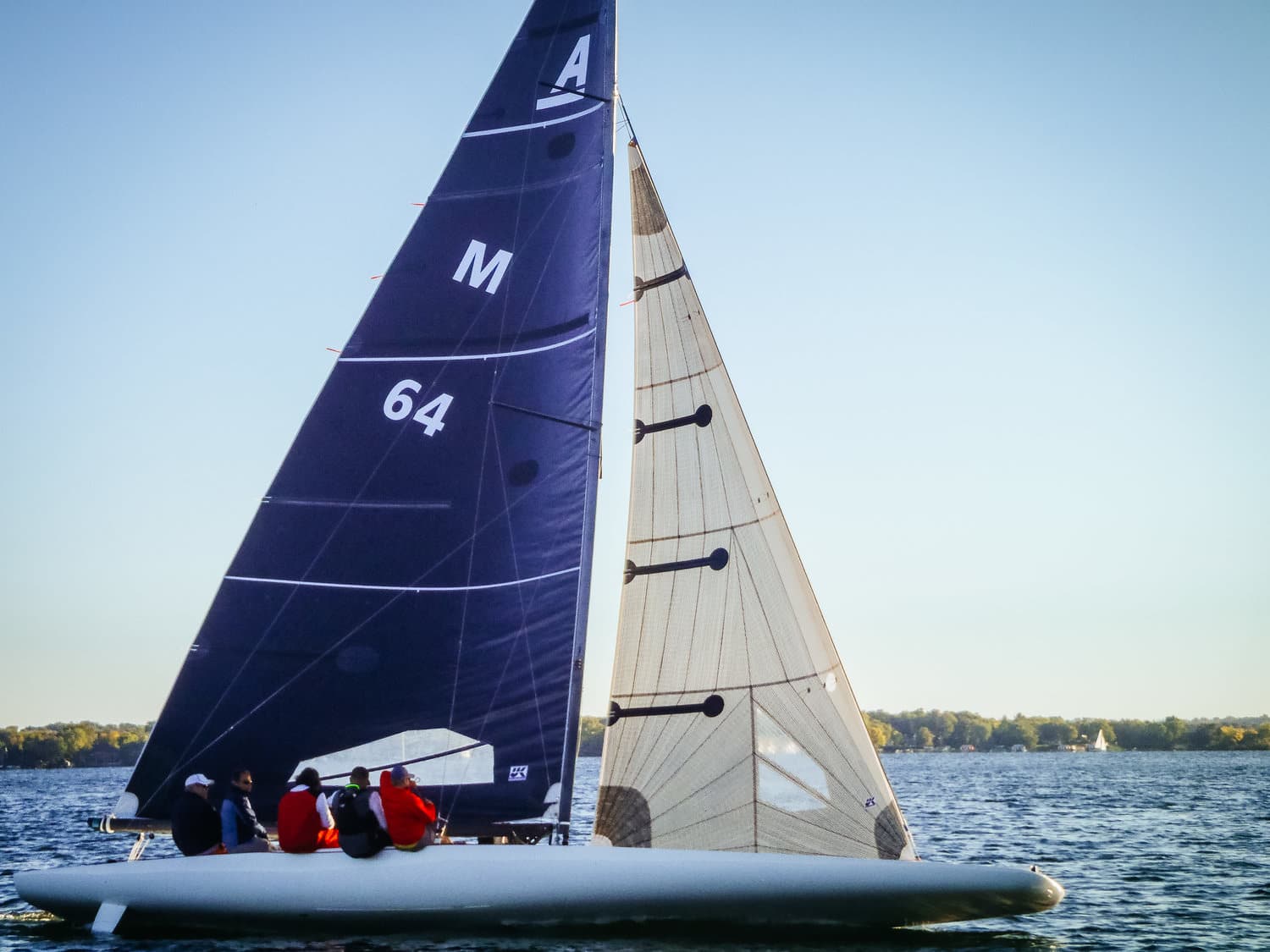
Construction Options

Radial Woven Polyester
Description:
Tri-Radial panel layout
Material:
Warp-oriented woven polyester cloth
Shape Stability:
★★★
Durability:
★★★★
Price:
$$$

Radial Polyester Laminate
Description:
Tri-Radial panel layout
Material:
Warp-oriented polyester laminates
Shape Stability:
★★★
Durability:
★★★
Price:
$$$

Radial Carbon Laminate
Description:
Tri-Radial panel layout
Material:
Warp-oriented carbon laminates
Shape Stability:
★★★★
Durability:
★★★
Price:
$$$$
FAQs
What is a tri-radial sail?
It’s a sail built from long, narrow panels (gores) that radiate from the three corners. Laying them out this way rotates the cloth’s thread line to follow the loads that arc between the corners, so the strong warp yarns line up with the primary load paths.
How is a radial genoa different from X-Drive or Titanium?
In a radial sail the strong yarns are woven into the cloth and are cut at every seam, so they’re discontinuous — which can let the sail distort at the seams. UK’s load-path sails (Tape-Drive, X-Drive, Titanium) run continuous yarns corner to corner, which holds shape better. Radial is the more traditional, often more economical, choice.
Why use more than one cloth in the sail?
Because a radial sail has so many panels, we can place stronger laminate where the loads are highest (leech and tack), lighter cloth at the less-loaded luff, and tough, chafe-resistant cloth in the foot where it takes abuse from tacking and the lifelines. The result is a lighter sail with strength exactly where it’s needed.
Which radial construction should I choose?
Woven polyester is the most economical and the most durable for everyday club racing; polyester laminate adds a little shape-holding; carbon laminate gives the best shape stability of the three for more serious racing. Your loft can match the choice to your boat and budget.
Who is a radial genoa for?
Racers who want proven, dependable performance but would rather not move to a string or membrane sail — and who value being able to tune cloth weight and type panel by panel.